Food — Foundations
Last updated: 2025-12-30 · 9 min read
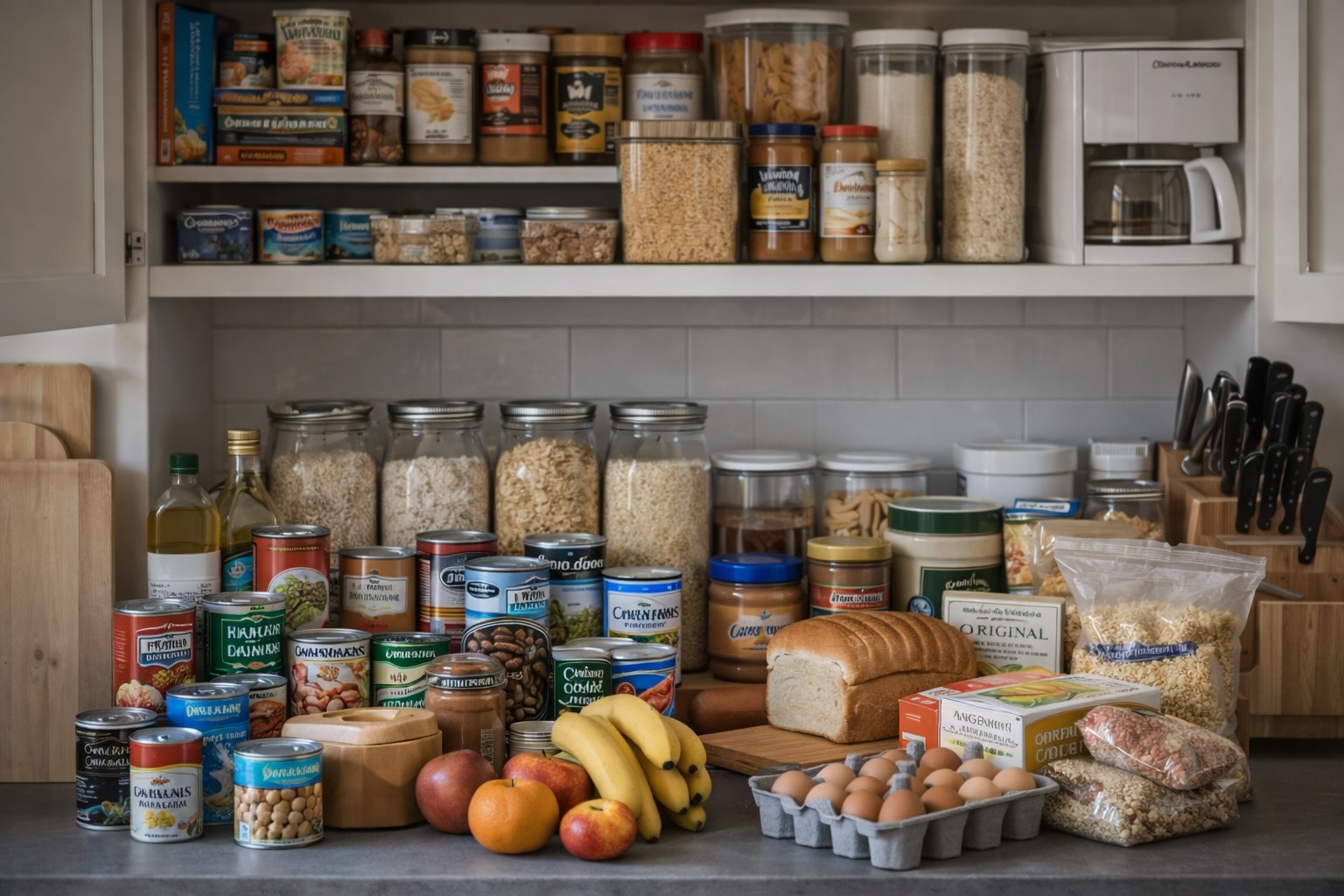
Food stability comes from simplicity, not stockpiling. This guide shows how to build a practical food system using meals you already eat, so your household can maintain nutrition, consistency, and morale without overcomplication.
- Build a baseline using foods you already eat (rotation is the real superpower).
- Plan meals, not items: calories + protein + fats + morale.
- Short-term overlap with normal life beats “special emergency food.”
- A simple labeling system prevents waste and stress.
Purpose
Create a food system that remains usable under stress by focusing on meals, not items. This means covering calories, protein, and fats while maintaining rotation, minimizing waste, and preserving morale through familiar, repeatable meals.
Think in meals, not items
Most people overestimate their food security because they count items instead of meals. A shelf of cans may only represent a few days of complete meals.
- Ask: “How many full meals can we eat?”
- Account for breakfast, lunch, and dinner
- Include cooking fuel and water
Planning by complete meals prevents gaps (e.g., calories without protein, or food without fuel/water).
- Pick 7–10 repeatable ‘base meals’ your household actually eats.
- For each meal, list: main + side + seasoning + cooking method + required water.
- Store the ‘meal kit’ together (bin/bag) so it’s grab-and-go under stress.
Calorie baseline
A simple baseline is 2,000 calories per adult per day. Adjust upward for physical work or cold environments.
- Children and elderly often need fewer calories
- Stress and cold increase energy demand
Use a conservative baseline so your plan works even during higher activity or cold weather.
- Start with ~2,000 kcal/adult/day (adjust for body size/activity); add 10–20% buffer.
- Track one normal day of eating and translate it to shelf-stable equivalents.
- Prioritize calorie-dense staples: rice, pasta, oats, beans, nut butters, oils.
Short-term layer (0–30 days)
- Canned meals, soups, beans, tuna
- Comfort foods and snacks for morale
- Fresh foods with longer shelf life (potatoes, onions, squash)
This layer should overlap heavily with what you already eat.
Short-term is about continuity and convenience—minimize disruption while supply chains are uncertain.
- Keep ‘no-cook’ options: canned meals, ready protein, crackers, electrolyte packets.
- Buy a little extra of what you already use each week (quietly builds a buffer).
- Include comfort items (tea/coffee, spices, small sweets) to reduce decision fatigue.
Medium-term layer (1–12 months)
- Dry staples: rice, oats, lentils, pasta
- Powders: milk, eggs, protein
- Oils and fats (rotate frequently)
Medium-term is where rotation and storage discipline matter most.
- Build around staples + proteins + fats + flavor (spices/sauces).
- Use FIFO rotation: newest to the back; cook from the front weekly.
- Add one ‘specialty’ item per month (powdered milk, dehydrated veg, etc.).
Rotation and storage
- First-in, first-out rotation
- Cool, dark, dry storage
- Clear labeling with purchase dates
Rotation is the difference between a pantry and a plan.
- Label bins with month/year; set a quarterly rotation reminder.
- Store cool/dry/dark; avoid garages for heat-sensitive items (oils, vitamins).
- Keep pest protection: sealed containers + bay leaves + inspection routine.
Nutrition and morale
Calories alone are not enough. Nutrition and morale affect decision-making.
- Protein sources at every layer
- Fats for satiety and energy
- Spices, coffee, tea, or treats
Nutrition keeps you functioning; morale keeps you executing the plan.
- Aim for: protein daily, fiber daily, and some micronutrient coverage (veg/fruit).
- Stock flavor: salt, pepper, garlic, hot sauce, curry, soy sauce, bouillon.
- Plan a weekly ‘treat meal’ from stored items—routine reduces stress.
Protein planning
Protein shortages impact strength and cognition faster than calorie shortages.
Protein is the hardest macro to maintain; plan it explicitly.
- Mix sources: canned fish/chicken, beans/lentils, powdered eggs, protein powders.
- Target 60–100g/day/adult depending on size and training; adjust as needed.
- Pair beans with rice/oats to improve amino acid profile.
Shelf life reality
Storage conditions matter more than printed expiration dates.
Dates are guidelines; storage conditions are the real determinant.
- Oils go rancid fastest—buy smaller bottles and rotate often.
- White rice stores longer than brown; whole grains store shorter.
- Inspect monthly: bulging cans, off smells, moisture, pests.
Storage geometry
Food should be visually scannable in seconds.
A simple baseline you can actually use
A good baseline is one you can cook, rotate, and enjoy. The goal is to cover calories, protein, and fats with foods that match your routine.
- Pick 10–15 “default meals” your household already likes.
- Stock ingredients for those meals in 2–4 week quantities.
- Add a small “no-cook” buffer for stressful days.
- Buying foods you never eat (they won’t rotate).
- Over-optimizing brands or “perfect macros.”
- Relying on one staple (e.g., rice-only) without protein/fat.
The three pillars: calories, protein, fats
If you only remember one thing: calories keep you moving, protein keeps you strong, and fats keep you satisfied.
- Protein: canned meats, beans/lentils, powdered protein, nut butters
- Fats: olive oil, ghee, coconut oil, nut butters (rotate frequently)
- Carbs: rice, oats, pasta, potatoes, flour
Rotation system that takes 2 minutes
Rotation doesn’t need spreadsheets. Use a simple rule: new items go behind old items, and the oldest items get used first.
- Write purchase month/year on the top with a marker.
- Keep “open now” bins for week-to-week cooking.
- Keep “reserve” bins for your 30–90 day layer.
Morale foods are not optional
During stress, appetite and mood shift. A small set of morale foods can prevent bad decisions and conflict.
- Coffee/tea, chocolate, spices, hot sauce, comfort snacks
- Simple desserts (instant pudding, baking mixes)
- “Special meal” ingredients for weekends
A quick starter checklist
- 7 days: default meals + snacks + breakfast
- 30 days: staples + protein + fats + morale foods
- 90 days: expanded rotation and cooking flexibility
Good storage prevents waste and makes weekly rotation easy.
- Use clear bins by category: breakfasts, proteins, staples, snacks, spices.
- Keep a ‘top shelf’ for daily-use items and a ‘reserve shelf’ for buffer.
- Write a simple inventory list (paper + phone note) and update monthly.
Next step
Once the baseline is stable, move to Food — Practical for longer disruptions and cooking constraints.
Educational content only.