Superfoods for Hair & Skin
Last updated: 2026-01-13 · 12–14 min read
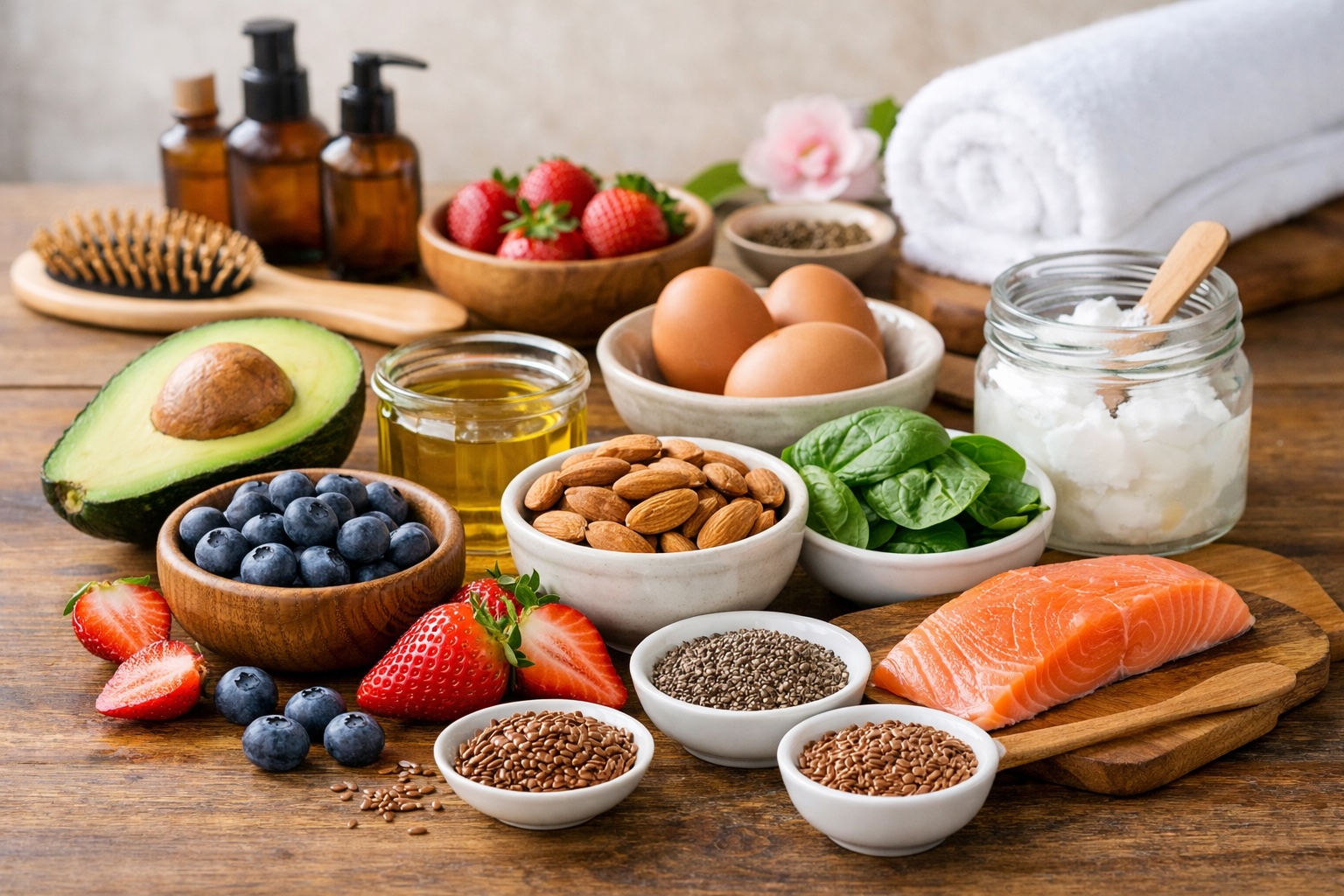
Hair and skin health are usually shaped more by consistent daily habits than by expensive products or quick-fix supplements. Simple whole foods, repeated regularly, help provide the protein, fats, minerals, hydration, and recovery support that visible tissues depend on over time.
Diet is one part of hair and skin health; changes can have other causes and should not be assumed to come from a food deficiency.
- Hair and skin reflect long-term nutrition more than quick fixes.
- Protein, minerals, and sleep consistency matter more than supplements.
- Support the skin barrier with healthy fats and hydration.
- Pick repeatable foods you can eat weekly.
Purpose
Help readers build a practical and sustainable nutrition foundation that supports hair strength, skin health, and overall recovery through repeatable whole-food habits rather than short-term optimization trends.
Visible health reflects deeper patterns
Hair and skin often respond slowly because they reflect broader patterns involving nutrition, sleep, hydration, stress, and recovery over time rather than single meals or isolated products.
This is why steady habits usually matter more than extreme routines. Consistency creates the conditions where repair and renewal can happen naturally.
The basics
- Protein: hair is largely keratin; low protein can show up as shedding, slow regrowth, or brittle hair over time.
- Iron: low iron stores can correlate with fatigue and shedding; talk to a clinician if you suspect deficiency.
- Zinc: supports many enzymes involved in repair and immune function; deficiency can affect hair/skin.
- Omega-3 fats: support skin comfort and barrier function for many people.
- Vitamin C: supports collagen formation and helps absorption of plant-based iron.
- Sleep: chronic poor sleep is a multiplier for stress and inflammation; it can show in skin and hair quickly.
Quick self-check (2 minutes)
- Am I eating protein at least 2–3 times/day?
- Do I regularly eat iron + vitamin C foods (or animal iron sources)?
- Do I get healthy fats most days (olive oil, nuts, fish)?
- Am I sleeping a consistent window (even if imperfect)?
The “superfood stack” for hair & skin
These foods were chosen because they’re nutrient-dense and realistic: easy to buy, easy to use, and many store well. Pick 6–10 that fit your preferences and rotate them.
Protein + key nutrients
- Eggs: complete protein + biotin + choline; an easy daily anchor.
- Greek yogurt / kefir (when available): high protein; fermented foods can support digestion.
- Canned salmon/sardines: protein + omega-3s; bonus calcium if you eat soft bones.
- Lean meats or tofu/tempeh: practical protein options depending on preference.
- Collagen-rich soups/broths (optional): not magic, but convenient protein support if you enjoy it.
Minerals (often the bottleneck)
- Pumpkin seeds: zinc + magnesium; easy topping.
- Beans & lentils: iron + protein + fiber; pantry staple.
- Oysters (canned/smoked, if you like them): very high zinc; small amounts go far.
- Dark chocolate (70%+): magnesium + polyphenols (enjoy as a small square, not a “supplement”).
Skin barrier + glow basics
- Extra-virgin olive oil: supports overall dietary pattern; helps absorption of fat-soluble nutrients.
- Walnuts / almonds: fats + vitamin E (almonds) + minerals; store cool/dry.
- Avocado (fresh): healthy fat + fiber; optional depending on budget/availability.
Vitamin C + colorful plants
- Bell peppers, citrus, kiwi: vitamin C powerhouses for collagen support.
- Tomatoes: lycopene; pair with olive oil for absorption.
- Broccoli / leafy greens: vitamin C + fiber; easy add-on.
- Blueberries (fresh/frozen): polyphenols; easy daily add-in.
Why these foods help
- Protein foods provide the raw materials for hair structure and tissue repair.
- Iron + vitamin C together improves your ability to use plant-based iron (beans/lentils + tomatoes/citrus).
- Zinc foods support repair enzymes and immune function (pumpkin seeds, oysters).
- Omega-3 foods support skin comfort and can help balance dry-feeling skin for some people.
- Olive oil + colorful plants is a proven “pattern” in many healthy diets (and is easy to sustain).
Practical daily ideas
Use these modules to get benefits without turning your life into a project.
- Breakfast A: Greek yogurt + blueberries + pumpkin seeds + drizzle of honey.
- Breakfast B: eggs + sautéed broccoli + olive oil; fruit on the side.
- Lunch: lentil soup + tomatoes + olive oil; add peppers or citrus for vitamin C.
- Dinner: rice + beans + canned salmon + frozen vegetables.
- Snack: almonds + dark chocolate square, or walnuts + fruit.
7-day “minimum effective” plan
- Eat eggs 3–5 days this week (or another preferred protein).
- Add pumpkin seeds to one meal daily.
- Include beans/lentils 3 days this week.
- Use olive oil on vegetables most days.
- Get a vitamin C food daily (peppers/citrus/berries).
Common pitfalls
- “More supplements” instead of food: if diet is inconsistent, supplements rarely fix the root.
- Too little protein: the most common miss for active people and busy schedules.
- Very low calories: can increase shedding; hair is non-essential tissue in survival logic.
- Ignoring sleep: even a small improvement (same bedtime 4 nights/week) can help.
Resources
Next steps
Continue with other Superfoods articles.
Educational content only. Not medical advice.