Food — Practical
Last updated: 2025-12-30 · 10 min read
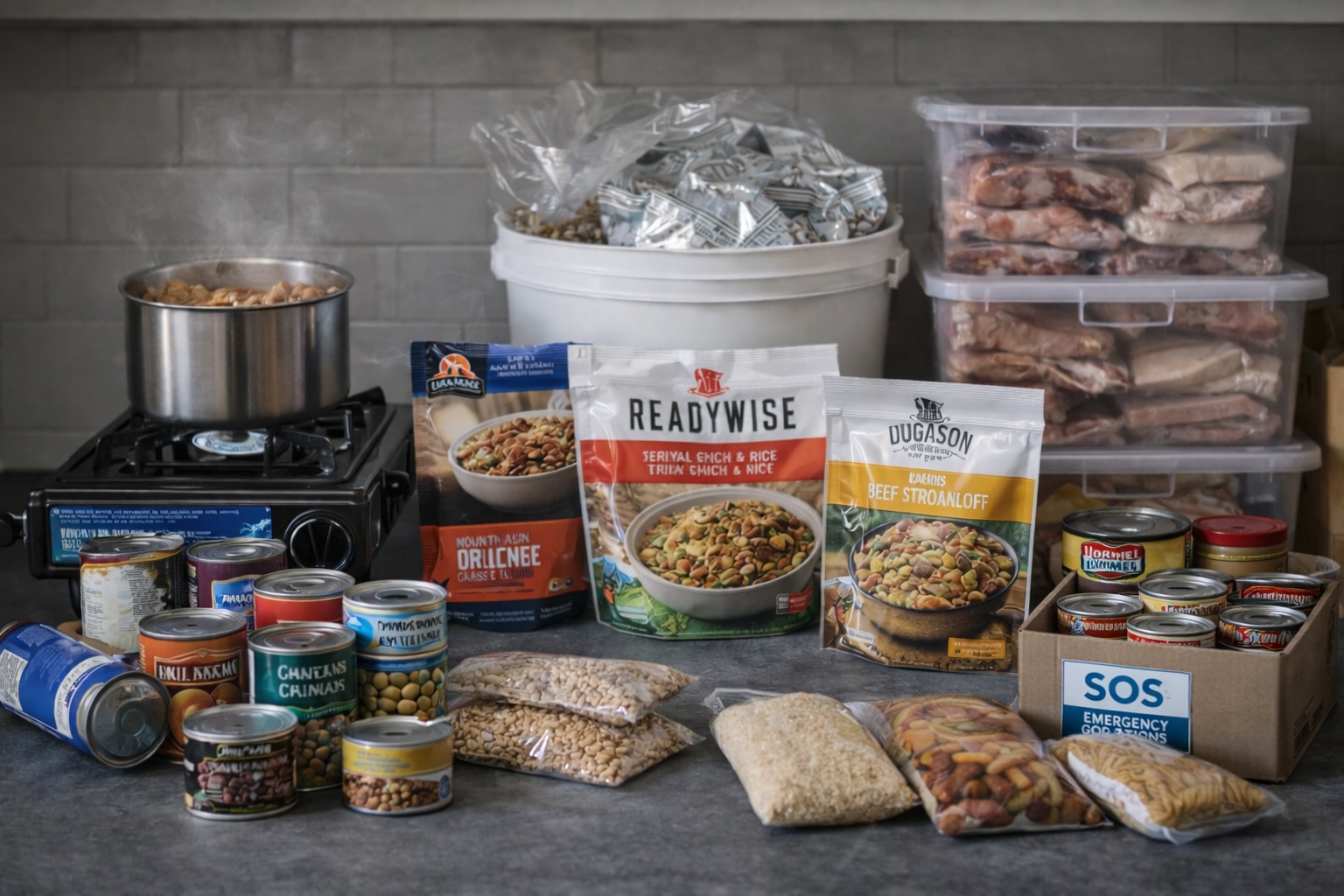
Food resilience is not just about storage. It is the ability to continue preparing, adapting, and sustaining meals when water, fuel, power, or supply systems become unreliable.
- Food systems depend on water, fuel, and preparation routines—not just storage.
- Simple rotating systems outperform large neglected stockpiles.
- Design for no-cook days, low-fuel weeks, and supply interruptions.
- Routine and simplicity reduce stress during disruptions.
Purpose
Help readers build a practical food system that remains manageable, flexible, and sustainable during disruptions without depending on perfect conditions.
Simple food systems outperform large stockpiles
Food resilience works best when systems are simple enough to maintain under stress. A smaller food system that rotates regularly is usually more resilient than a large stockpile that depends on perfect organization or ideal conditions.
The goal is not maximum accumulation. The goal is continuity: meals that remain practical, familiar, and sustainable as conditions change.
Cooking without the grid
- Propane or butane stoves
- Electric cooking tied to battery systems
- No-cook meal backups
Assume electricity may be intermittent; your food plan should still work.
- Pick 2–3 cooking modes: camp stove, grill, and one indoor-safe option (if available).
- Stock fuel sized to your habits (propane canisters, charcoal, wood).
- Practice one ‘low-fuel’ meal weekly so it’s familiar.
Water dependency
Many dry staples require more water than expected. Always plan food and water together.
Most ‘easy’ foods still require water for cooking, cleaning, and hydration.
- Budget water for cooking + drinking: plan meals that use minimal water.
- Keep quick-cook staples (instant rice, couscous, oats) for water savings.
- Include disposable/low-wash options for short disruptions (paper plates, wipes).
Extended timelines
- 1–3 months: heavy reliance on dry staples
- 3–12 months: careful rotation and supplementation
- Beyond: resupply becomes more important than storage
Longer disruptions shift priorities: durability, nutrition, and resupply strategy.
- Keep some long-life staples (rice/beans) plus ready-to-eat foods for transitions.
- Add a replenishment rhythm: weekly top-offs even if shelves look normal.
- Consider dietary constraints early (allergies, kids, seniors).
Psychology and routine
Predictable meals reduce stress. Simple routines preserve energy and morale.
During uncertainty, routine is a stabilizer—especially around meals.
- Create a simple meal schedule (breakfast base + rotating dinners).
- Keep caffeine habits stable; abrupt changes can amplify anxiety.
- Use meals as a ‘check-in’ moment: hydration, electrolytes, mood scan.
What not to rely on
- Gardening as a primary food source
- Unfamiliar foods you won’t eat
- Single-point solutions
Avoid single points of failure.
- Don’t rely only on delivery, restaurants, or just-in-time grocery trips.
- Don’t rely on one store/brand; diversify suppliers and formats.
- Avoid exotic items you won’t eat—waste is a hidden cost.
Fuel efficiency
Match food types to available cooking fuel.
Fuel is a limiter; choose meals and methods that stretch it.
- One-pot meals reduce fuel and cleanup: chili, lentil stew, rice bowls.
- Batch cook when power is available; reheat with minimal fuel later.
- Use a lid, windscreen, and pre-soak beans to cut cook time.
Depletion awareness
Track consumption during disruptions.
Know your burn rate so you can adjust before you run out.
- Track: ‘days of meals’ remaining, not just number of cans.
- Set trigger points: at 30 days left, shift to rationing mode.
- Keep a ‘bridge week’ reserve you don’t touch unless supply chains break.
Community exchange
Staples trade well when variety is scarce.
Refrigeration strategy
If power is intermittent, treat refrigeration as a time window, not a guarantee. Freeze water bottles to stabilize temperature and group fridge items by priority.
- Use a “first to spoil” shelf and eat that first.
- Keep freezer mostly full (thermal mass helps).
- When in doubt: cook it, then eat it.
Nutrition under stress
Under stress you’ll crave quick calories. Keep protein and fats present to prevent energy crashes.
- Add olive oil or nut butter to simple meals.
- Keep easy protein options (canned fish, jerky, lentils).
- Use spices to keep meals emotionally “alive.”
Next step
Combine food, water, and power into a single household resilience plan.
Educational content only.