Power Security (Practical): A Layered Plan That Survives Real Outages
Last updated: 2025-12-30 · 10 min read
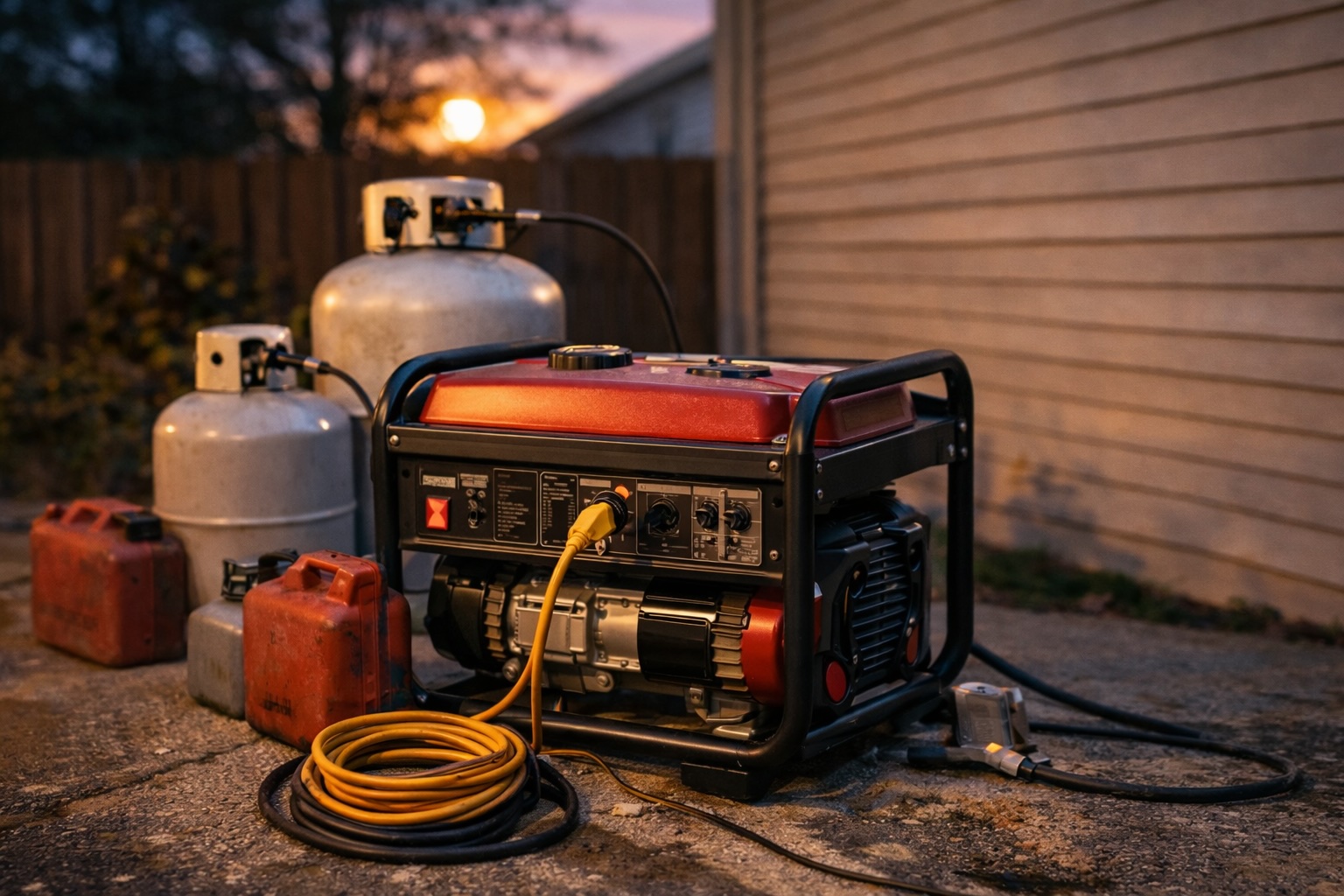
Power security works best when it’s layered. This guide focuses on execution—what actually works during outages, how to avoid single points of failure, and how to stay low‑profile.
- Batteries handle most outages quietly and safely.
- Generators are tactical tools, not 24/7 solutions.
- Solar extends your system—it rarely replaces the grid.
- Mobility, cords, and fuel management matter as much as wattage.
The layered power model
A resilient power plan has multiple layers so one failure doesn’t collapse everything:
- Stored energy (batteries) for immediate, silent power
- Generation (generators) for periodic recharge and heavy loads
- Renewables (solar) to reduce fuel dependence
- Distribution via safe cords, power strips, and load control
Batteries as the core
Batteries should carry the majority of your outage time. They’re quiet, indoor‑safe, and easy to use under stress.
- Portable power stations for essential electronics
- Distributed power banks for redundancy
- Dedicated battery for modem/router when possible
Practical insight: two medium batteries often outperform one large unit in real life.
Using generators tactically
Generators are best used in short, deliberate windows:
- Recharge batteries
- Run refrigeration briefly
- Power pumps or tools if needed
Continuous generator use increases noise, fuel consumption, and risk. Treat generators as support assets—not the foundation.
Solar as an extender
Small‑scale solar works best when paired with batteries:
- Portable panels feeding battery stations
- Daytime trickle charging to offset usage
- Reduced reliance on fuel logistics
Solar rarely replaces grid power outright, but it dramatically increases endurance.
Distribution and safety
Most power failures happen at the distribution layer. Safe delivery matters as much as generation.
- Use outdoor‑rated extension cords for generators
- Label cords and loads to prevent overload
- Never backfeed without a transfer switch
- Keep cords visible and away from walk paths
Good distribution prevents injuries, fires, and cascading equipment failure.
Noise, visibility, and discretion
Power systems change how visible you are during an outage. Quiet systems preserve optionality.
- Batteries are silent and attract no attention
- Generators broadcast activity through sound and smell
- Solar is visible but passive and predictable
Use generators briefly and deliberately to avoid unnecessary exposure.
Designing for failure modes
Assume something will fail. Good systems degrade gracefully:
- If solar fails → batteries still work
- If generator fails → batteries still carry essentials
- If one battery fails → others remain usable
Redundancy across types matters more than redundancy within a single device.
Psychology of outages
Stress increases mistakes. Simpler systems reduce cognitive load:
- One extension cord beats five power strips
- Labeled plugs prevent overload
- Familiar routines outperform complex setups
Practice once in calm conditions to remove uncertainty later.
Many failures happen not from lack of power, but from poor distribution:
- Use outdoor‑rated extension cords when required
- Label cords and loads to avoid overload
- Never backfeed a home without a proper transfer switch
A 60‑minute upgrade plan
- 0–15 min: list essential loads and their wattage
- 15–30 min: test battery runtime on essentials
- 30–45 min: plan generator run windows (if applicable)
- 45–60 min: stage cords, fuel, and solar connections
Common mistakes
- Designing for maximum power instead of maximum uptime
- Running generators continuously
- Ignoring cord length, ratings, and routing
- Failing to test the system once under load
Next step
Once your layered system works on paper, test it during a planned outage window. Real confidence comes from rehearsal, not equipment.
Educational content only. Follow local electrical codes and manufacturer guidance.