Whole Foods Recipes: Homemade Applesauce
Last updated: May 5, 2026
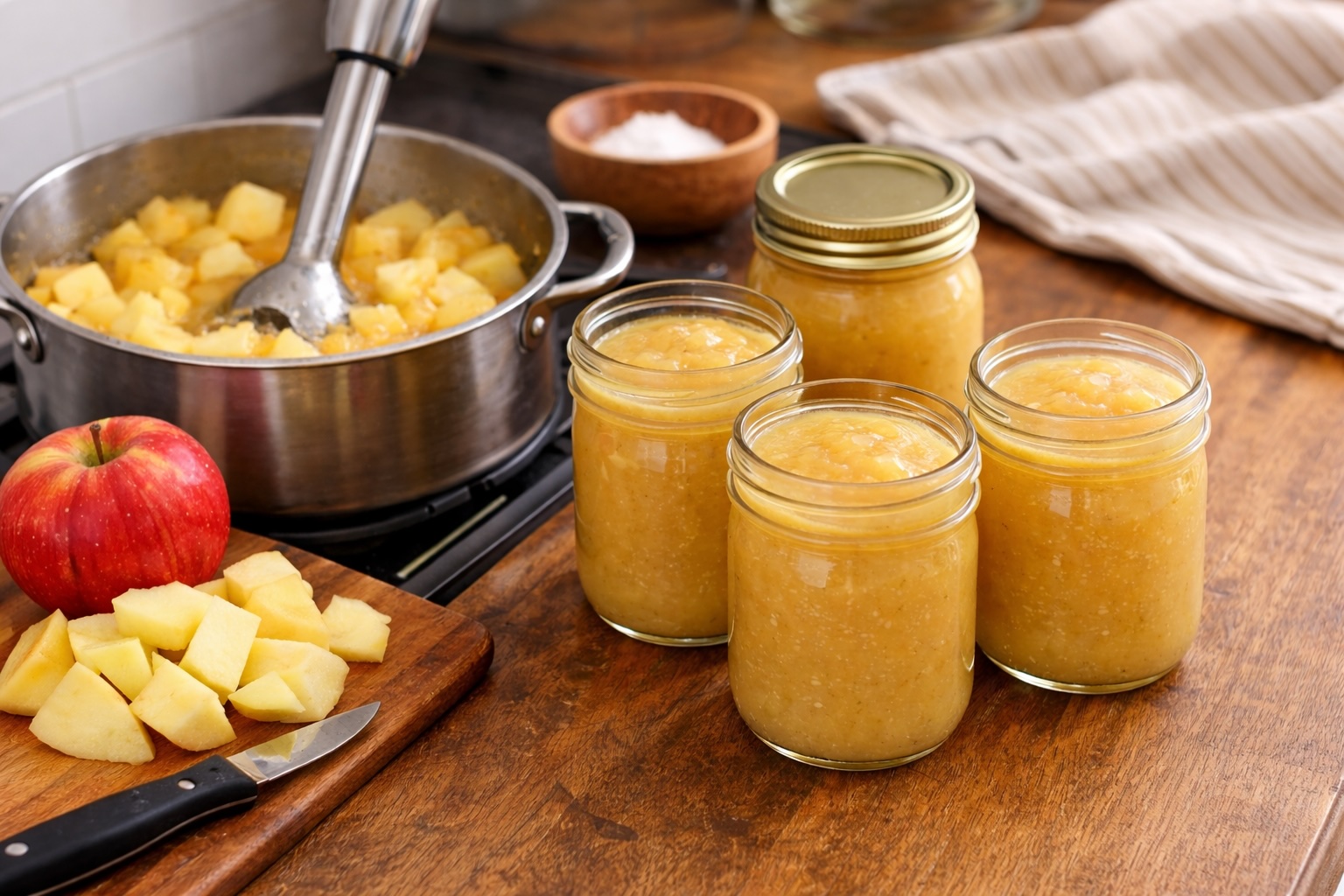
Homemade applesauce is one of the simplest food-control systems you can build: a clean ingredient snack, a flexible side, and an easy family-friendly fallback that takes little effort to repeat.
- Simple ingredients, better control — apples, a small amount of water, and optional cinnamon or a pinch of salt.
- Batch once, use many times — applesauce works for snacks, breakfast, desserts, and simple backup meals.
- Texture is adjustable — leave it rustic for adults or blend it smooth for kid-friendly consistency.
Purpose
Build a reliable, repeatable applesauce that replaces many packaged snack options with something simpler, cleaner, and easier to trust. This is less about chasing a perfect recipe and more about creating a food staple you can run again without friction.
Total time
About 25–35 minutes, depending on apple size and how smooth you want the final texture. Active time is low, which makes this a high-leverage kitchen habit.
Ingredients
- Honeycrisp apples — enough for the size of batch you want (this variety brings natural sweetness and balanced flavor)
- Water — a small splash to help the apples soften without sticking
- Cinnamon — optional
- Salt — optional, just a small pinch to sharpen flavor
Method
1) Prep the apples
Peel the apples if you want a smoother, more kid-friendly result. Slice or roughly chop them without worrying too much about uniformity. This recipe is forgiving.
2) Cook gently
Add the apples to a pot with a small splash of water. Cover and cook over medium-low heat for about 15–25 minutes, stirring occasionally, until the apples are very soft and easy to break apart.
3) Texture
For a smooth texture, blend with an immersion blender or standard blender once the apples have softened. Smooth is usually the easiest format for children and pouch replacements.
4) Finish simply
Add cinnamon if desired. A tiny pinch of salt can make the apple flavor feel fuller without making the sauce taste salty. Let it cool before storing.
Why this works
Applesauce is useful because it does more than solve one meal. It gives you a controlled snack, a clean breakfast add-on, and a fallback food that is easy to keep around. That makes it practical not only for families, but also for anyone trying to reduce dependence on ultra-processed convenience foods.
It also scales well. You can make a small batch for the next few days or a larger batch and freeze portions for later. That turns a simple recipe into a repeatable system.
Storage and use
- Fridge: about 5–7 days in sealed containers
- Freezer: 1–2 months in portioned containers
- Breakfast: stir into oatmeal or yogurt
- Snack: serve cold on its own as a simple whole-food option
- Dessert support: pair with yogurt, cinnamon, or other simple toppings
Make apples easy to eat (remove friction)
Whole apples are ideal, but they do not always work in real life—especially when you are tired or dealing with picky eaters. The goal is to make apples easy enough that they actually get eaten.
- Pre-sliced apples (same day use): Slice an extra apple while preparing a meal (for example, when making oatmeal) and store it in a sealed container in the fridge. These are best eaten the same day or the next day at most. This turns apples into a “ready-to-eat” snack similar to boiled eggs or pre-made meals.
- Applesauce as a default fallback: Applesauce removes almost all friction. It works consistently for both adults and children and can replace packaged snack options with minimal effort.
- Do not over-engineer: If slicing and storing for the same day works, that is enough. The goal is consistency, not perfection.
Convenience drives behavior. A slightly less “ideal” format that gets eaten regularly is better than a perfect option that gets avoided.
One batch → multiple uses
Applesauce works best when treated as a system rather than a single recipe. One batch can support multiple use cases throughout the week.
- Primary: applesauce as a snack or breakfast side
- Secondary: stir into oatmeal or yogurt
- Convenience bridge: use alongside pre-sliced apples for quick access
- Fallback option: a reliable, low-effort food when you do not want to cook
This “one batch, many uses” approach is what makes applesauce high leverage. It reduces decision-making and replaces multiple packaged options with one repeatable process.
Applesauce to juice (when needed)
Apple juice is easy to overconsume because it removes fiber and concentrates sugar. However, it can still be used in a more controlled way.
- Diluted juice: mix 1 part apple juice with 2–3 parts water to reduce sugar load while keeping the taste acceptable for children.
- Applesauce as a base: applesauce can be thinned with water to create a lighter, more balanced “juice-like” drink.
- Use intentionally: treat juice as a convenience tool, not a default. It is most useful when it improves compliance without becoming the main source of fruit intake.
The goal is not to eliminate juice entirely, but to use it in a way that fits into a balanced, repeatable system.
Practical notes
- Use apples you already like eating: if the raw apple is good, the applesauce usually improves from there.
- Do not overwater: start with a small splash only. Apples release their own moisture as they cook.
- Blend only as much as needed: some batches are better slightly textured than completely pureed.
- Think system, not novelty: the goal is to make something easy enough that you will actually do it again.
Why it matters
Packaged pouches and convenience snacks are easy, but they often come with added ingredients, extra cost, and less control. Homemade applesauce is a reminder that simple food can still be practical. It does not need to be elaborate to be useful. It just needs to be repeatable.
In that sense, applesauce is not just a recipe. It is a control point.
Next steps
Continue with more Whole Food Cooking.
This article focuses on general food quality and cooking with quality ingredients, not medical advice.