Whole Foods Recipes: Burger Buns
Last updated: April 2026
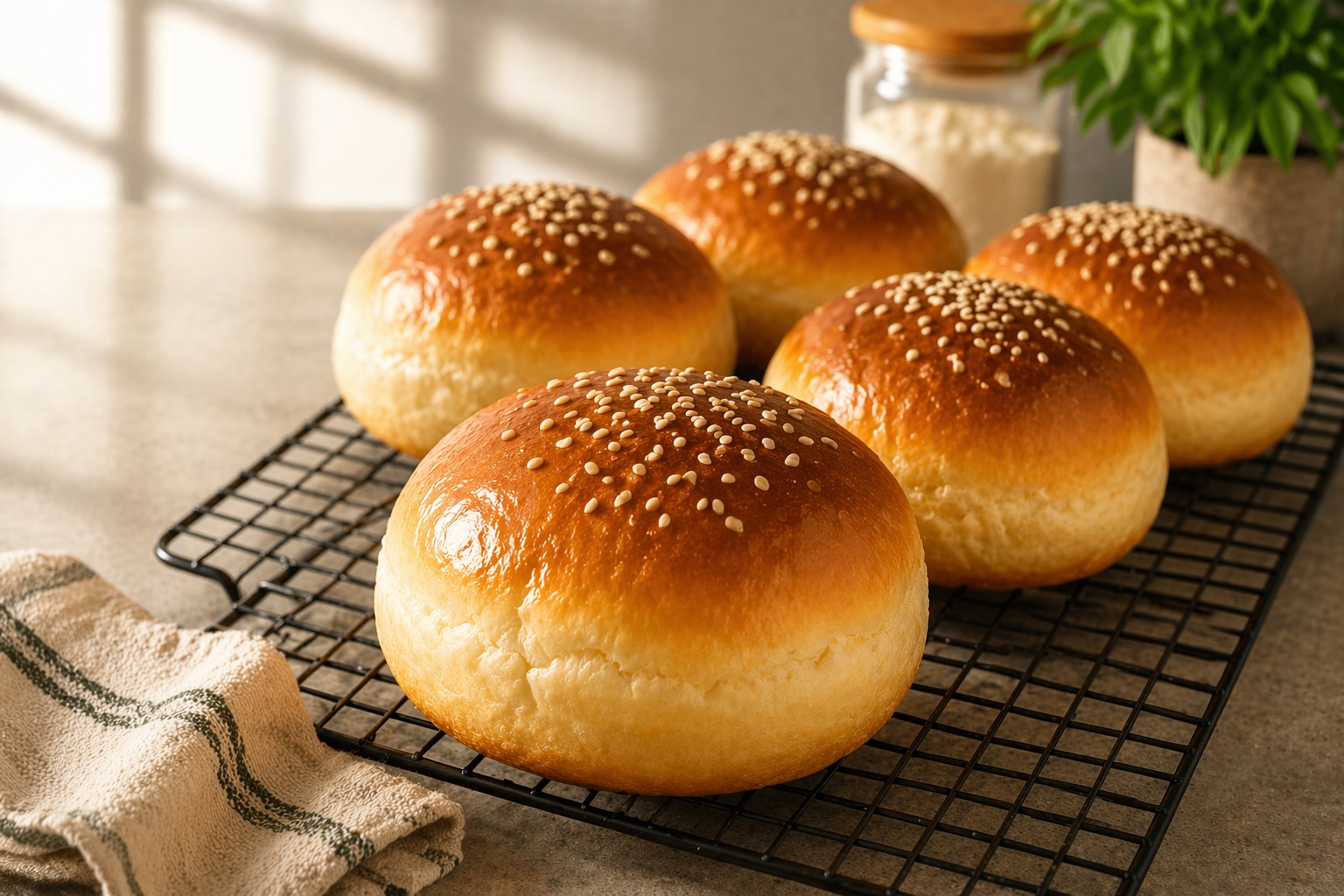
Soft, slightly rich homemade buns designed for consistency, structure, and kid-friendly texture. These are not just buns for one meal. They are a repeatable base that can upgrade burgers, sandwiches, and simple backup meals.
- Soft but structured — enriched dough creates tenderness without falling apart.
- Batch once, use multiple times — burger buns can support several meals instead of one.
- Kid-friendly by design — slight sweetness and a softer texture improve acceptance.
Purpose
Build a dependable bun that reduces reliance on store-bought options and supports repeatable meals at home. This is less about baking novelty and more about creating a consistent base you can run again without friction.
Total time
About 2–2.5 hours including rise time. Active work is low, which makes this a strong “system recipe” rather than a high-effort one.
Ingredients
- Bread flour (preferred) or all-purpose flour — 3½ cups
- Warm milk — 1 cup
- Eggs — 1 whole
- Butter — 4 tbsp (softened/european preferred)
- Sugar — 3 tbsp
- Salt — 1 ½ tsp
- Yeast — 2 ¼ tsp (1 packet)
- Sesame seeds (optional)
Method
1) Activate the yeast
Combine the warm milk, yeast, the egg and sugar. Let the mixture sit for 5–10 minutes until slightly foamy.
2) Mix the dough
Add butter, flour, and salt. Mix until a soft dough forms.
3) Knead
Knead for 8–10 minutes until smooth and elastic. The dough should feel soft and slightly enriched, not dry or stiff.
4) First rise
Cover and let the dough rise for about 1 hour, or until doubled in size.
5) Shape
Divide the dough into 6–8 equal portions. Shape each one into a tight, smooth ball by creating surface tension. Place them on a baking sheet with space between them.
6) Second rise
Let the shaped buns rise again for 45–60 minutes until puffy.
7) Finish and bake
Brush the tops lightly with beaten egg for color and shine. If using sesame seeds, sprinkle them on immediately after brushing so they adhere well during baking. Bake at 375°F (190°C) using a two-stage approach:
- First stage: 8 minutes
- Rotate tray and turn buns: helps even browning
- Second stage: 6–8 more minutes until golden brown
Total bake time is typically 14–16 minutes, but watch closely near the end.
Watch the browning closely: enriched dough (milk, butter, sugar) browns faster than standard bread. Buns can go from golden to overdone quickly, especially on the bottom. If needed, reduce bake time slightly or move the tray higher in the oven.
Why this works
- Enriched dough: Milk, butter, egg, and sugar create softness and flavor.
- Balanced structure: These buns are tender enough for everyday use but strong enough to hold fillings.
- Slight sweetness: The added sugar improves taste and makes the buns more appealing to children without pushing them into dessert territory.
Storage and use
- Room temperature: about 1–2 days in a sealed container
- Fridge: up to 3–4 days, though they may dry slightly
- Freezer: 1–2 months; thaw as needed
- Burgers: the most obvious use
- Sandwiches: useful for quick lunches with less prep
- Breakfast: can be used with eggs, butter, or a small amount of honey
Make buns easy to use (remove friction)
Like other staple foods, buns are most useful when they are easy to access.
- Freeze in portions: Store them individually or in small groups so you only thaw what you need.
- Pre-slice if helpful: This reduces effort during meals and helps buns function more like a ready-to-use staple.
- Pair with prepared proteins: These work especially well with pre-made burger patties or leftovers.
A bun that is ready to use turns a simple ingredient into a complete meal with very little effort.
One batch → multiple meals
These buns are most useful when treated as part of a system instead of a one-time baking project. One batch can support several meals throughout the week.
- Burger night
- Leftover sandwiches
- Quick breakfast options
This reduces decision-making and makes it easier to rely on simple, repeatable meals.
Pair with
Pair these buns with Burger Patties (80/20) to turn a simple protein prep into a complete, repeatable meal.
Practical notes
- Do not overbake: This is one of the fastest ways to lose softness.
- Soft dough is correct: Avoid adding too much extra flour unless absolutely necessary.
- Consistency matters more than perfection: Repeating the same method matters more than chasing a “perfect” bun every time.
- Rotate during baking: turning the tray and buns halfway improves even cooking and prevents hot-spot burning.
Why it matters
Store-bought buns are convenient, but they usually mean less ingredient control and less flexibility. Homemade buns provide a simple way to upgrade everyday meals without adding much complexity.
Like applesauce and other core recipes, this is not just about the final food. It is a control point.
Next steps
Continue with more Whole Food Cooking and pair this recipe with Burger Patties (80/20) for a complete homemade burger system.
This article focuses on general food quality and repeatable cooking systems, not medical advice.