Whole Foods Recipes: Shrimp Chowder
Last updated: October 27, 2026
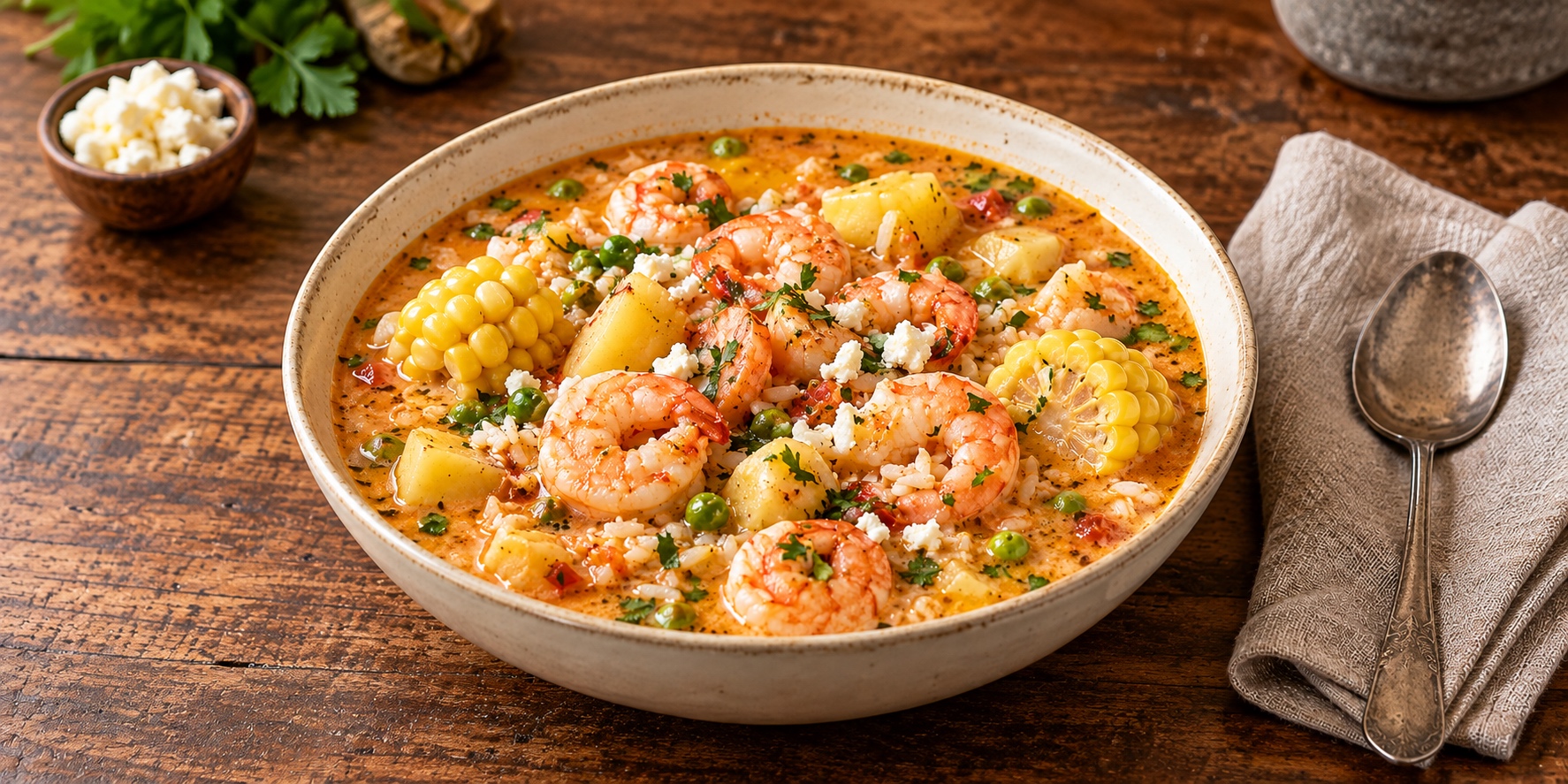
A hearty Peruvian-style shrimp chowder built around potatoes, corn, rice, and a gentle milk-and-cheese finish. Simple ingredients create a full meal, while adding the shrimp near the end keeps their texture tender.
- Build flavor first — onion, garlic, and ají panca give the broth its foundation.
- Potatoes and rice provide body — no flour or heavy cream needed.
- Shrimp go in late — cook them just until opaque and firm.
- Finish gently — add milk and cheese over low heat.
Purpose
This is a satisfying soup for days when you want a complete meal in one pot. The method keeps the ingredients recognizable and the cooking sequence clear: build the base, cook the vegetables, then finish with shrimp and dairy.
Traditional chupe uses river shrimp. This practical adaptation uses large shrimp that are easier to find.
Total time
- Prep: about 20 minutes
- Cook: about 45 minutes
- Total: about 65 minutes
- Makes: 4 generous servings
Ingredients
- 1½ lb (680 g) raw large shrimp, peeled and deveined
- 2 tbsp avocado oil
- 1 medium yellow onion, finely diced
- 3 garlic cloves, minced
- 1 tbsp ají panca paste
- 1 medium ripe tomato, finely chopped
- 1 tsp dried oregano
- 5 cups (1.2 L) shrimp/fish stock or water.
- ⅓ cup (65 g) uncooked white rice
- 1 lb (450 g) Yukon Gold or yellow potatoes, cut into ¾-inch pieces
- 2 ears sweet corn, each cut into 4 rounds
- ½ cup (75 g) frozen peas
- 1 cup (240 ml) whole milk
- 4 oz (115 g) queso fresco, diced
- Salt and black pepper, to taste
- 2 tbsp fresh parsley, chopped
- 4 eggs, one per bowl, cooked directly in the soup
Method
- Build the base. Heat the avocado oil in a large pot over medium heat. Add the onion and cook for 6–8 minutes until softened. Add the garlic and ají panca; stir for 1 minute.
- Cook the tomato. Add the tomato and dried oregano. Cook for 4–5 minutes, stirring, until the tomato softens and the mixture becomes thick.
- Start the soup. Pour in the stock and bring to a gentle simmer. Add the rice, potatoes, and corn. Season lightly with salt.
- Cook until tender. Simmer, partially covered, for 18–22 minutes, stirring occasionally, until the rice is cooked and the potatoes are tender. Add a little hot water if the soup becomes too thick.
- Cook the eggs. Keep the soup at a gentle simmer. Crack each egg into a separate spot in the soup. Cover and simmer for about 6–8 minutes, until the whites and yolks are firm. Avoid stirring through the eggs.
- Add peas and shrimp. Gently add the peas and shrimp around the cooked eggs. Simmer gently for about 3–5 minutes, depending on shrimp size, until the shrimp are opaque throughout and firm.
- Finish gently. Reduce the heat to low. Gently fold in the milk and diced queso fresco without breaking the eggs. Warm through without bringing the soup to a rolling boil. Turn off the heat, add the chopped parsley, and adjust salt and pepper.
- Serve. Divide among deep bowls, placing one cooked egg in each bowl and distributing the shrimp, potatoes, corn, and diced cheese evenly.
Notes
- Ají panca: It gives the base a mild pepper flavor and color.
- Corn: Sweet corn cooks within the listed time. Peruvian choclo may need longer; cook it separately until tender before adding.
- Thickness: Rice continues absorbing broth after cooking. Add a splash of water or stock when reheating.
- Herbs: Cook the dried oregano with the tomato to flavor the base. Add the fresh parsley after turning off the heat.
- Salt timing: Stock and queso fresco vary in saltiness. Make the final adjustment after adding the cheese.
Storage
- Refrigerate promptly in shallow containers.
- Use within 2 days for the best texture.
- Reheat only the portion needed, gently, until hot throughout.
Cooking note
The useful habit here is timing. Let the potatoes and rice finish, cook the eggs in the broth, then add the shrimp. Lower the heat for the milk and diced cheese, and finish with parsley. That sequence gives each ingredient the cooking it needs.
Next steps
Continue with more Whole Food Cooking.
This article focuses on general food quality and cooking with quality ingredients, not medical advice.