Water — Foundations
Last updated: 2025-12-30 · 9 min read
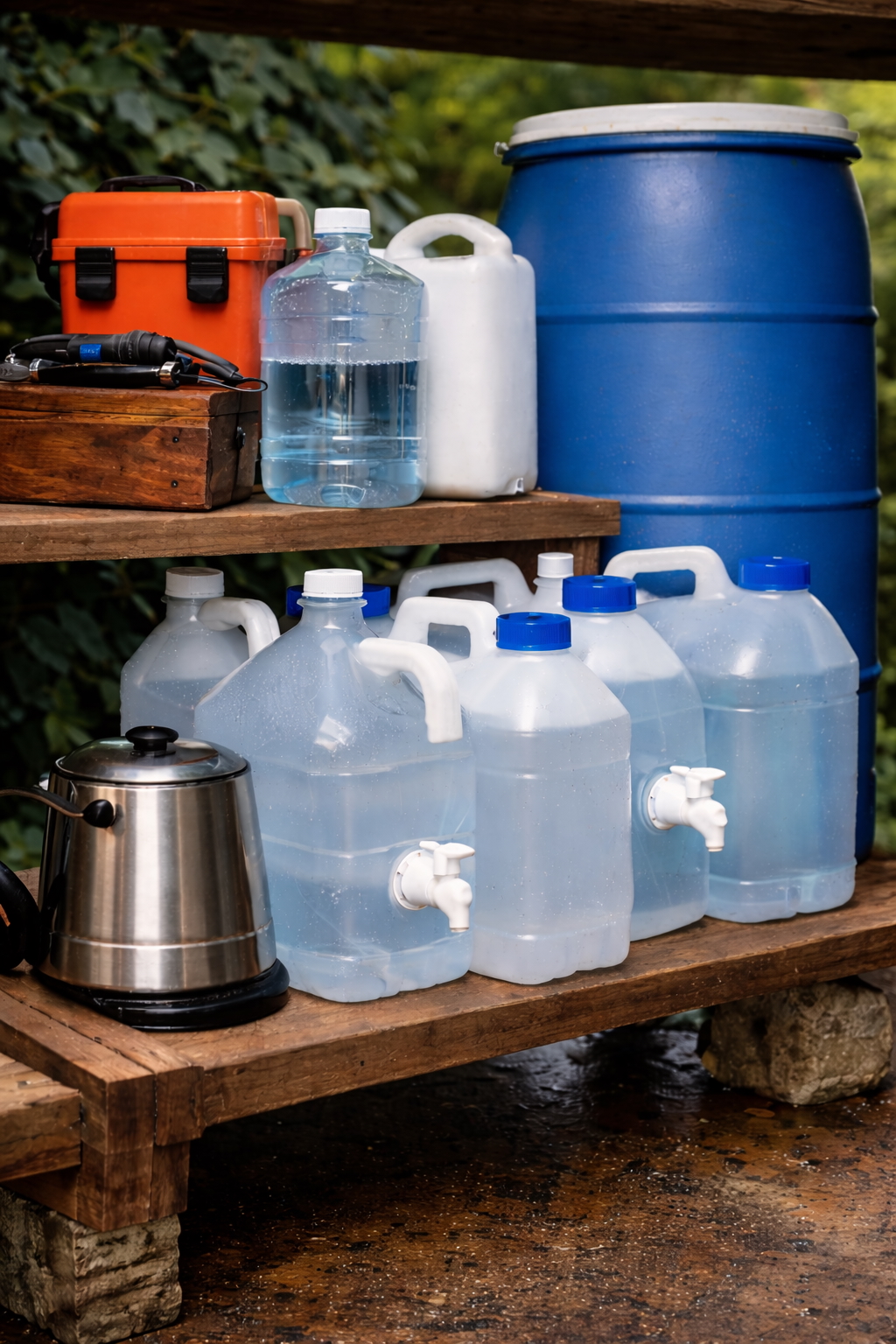
Water resilience is about reliability, not volume. This guide explains how to store, rotate, and treat water so your household can maintain safe supply under uncertainty without overbuilding or overcomplicating the system.
- Aim for ~1 gallon per person per day, then scale 3 days → 2 weeks → 30 days.
- Boring storage wins: food‑grade containers, cool/dark placement, labeled rotation.
- Pick one treatment method and run a full test now—before you need it.
- Keep a small grab‑and‑go subset so your plan survives real life.
Purpose
Establish a dependable water baseline that prioritizes safe storage, simple treatment, and easy rotation. The goal is to ensure consistent access to drinkable water using methods that remain practical under stress and easy to maintain over time.
How much water you need
Start with a baseline and refine later. For most households:
- Baseline: ~1 gallon per person per day (drinking + basic hygiene).
- Heat / heavy activity: increase the drinking-water buffer.
- Pets: plan extra and keep it in a separate labeled container.
Quick estimate: (people × days) = baseline gallons.
Storage that stays clean
Stored water fails when containers are wrong or storage conditions are sloppy. Keep it simple:
- Use food-grade containers with tight lids.
- Store cool and dark (heat and sun degrade plastics and taste).
- Label dates + use (drinking vs utility) to prevent accidental “reserve burn.”
- Prefer multiple manageable containers over one giant tank you can’t move or clean.
Treatment options (choose one you’ll actually use)
The “best” method is the one you can execute when tired and stressed:
- Boiling: reliable, but depends on fuel/power and time.
- Filtration: quiet and fast; excellent for routine use (capabilities vary by filter type).
- Chemical disinfection: compact backup; dosage and timing matter.
- Distillation: slower and energy-heavy, but higher certainty for suspicious sources.
Action: pick a primary method and do an end-to-end test run today (setup → treat → drink).
Rotation and taste
Most “water plans” fail because water sits too long or tastes off. Rotation solves both.
- Rotation rule: use oldest first, refill immediately.
- Taste changes: usually storage conditions (heat/sun) rather than “bad water.” Fix placement first.
Grab-and-go subset
Keep a small kit ready so you’re not improvising during a disruption:
- 2–5 gallons in carryable containers
- Your primary treatment tool
- One clean transfer container for pouring without contamination
Common mistakes
- Buying gear without a test run.
- Storing water in heat/sun and blaming the water.
- One heavy container that can’t be moved or cleaned.
- No refill plan—only storage.
FAQ
Do I need months of water? Not for most households. Start with 72 hours, then 2 weeks. Go longer only if you have space and a quiet rotation routine.
Should I store water in the garage? Often yes—if it stays relatively cool. Heat swings are the main risk.
What about “emergency pouches”? They can help, but the core is still: containers you can handle + a method you can execute.
Next step
Once your baseline is stable, move to the layered model in Water — Practical for refill sources and mobility.
Educational content only. When in doubt, follow local public health guidance.