Water Security (Practical): A Layered Plan for Real Disruptions
Last updated: 2025-12-30 · 10 min read
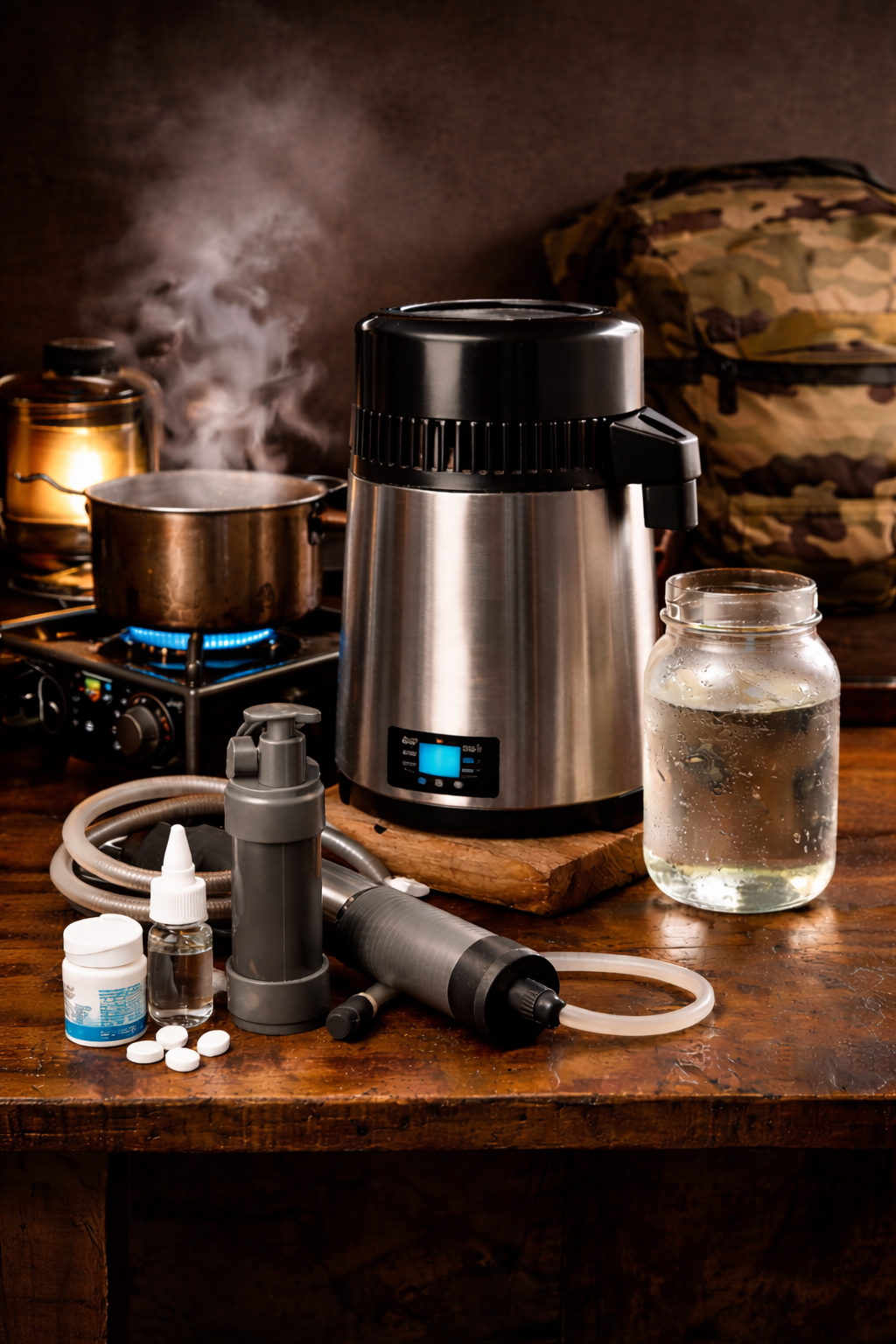
- Build redundancy: stored water + treatment + refill source + mobility.
- Filters are the daily workhorse; distillation is high‑certainty for very doubtful water.
- Treat rainwater as raw water for drinking (settle sediment → treat).
- Mobility matters: if you can’t move it safely, it isn’t part of the plan.
Water security is easiest when you build it in layers—so one failure doesn’t collapse the whole plan.
The layered model
Instead of chasing a “perfect” tool, build a plan that can absorb failures:
- Stored water for immediate reliability
- Treatment to make questionable water safe
- Refill sources so you can replenish
- Mobility so your plan survives real life
Filter vs. distill
Filters are the day-to-day workhorse: fast, quiet, and easy to keep in routine.
Distillation is your high-certainty tool when water quality is very doubtful. It’s slower and energy-heavy—use it when needed, not as your only plan.
A resilient home setup often looks like: sediment pre-filter → filter → (distill if needed).
Rainwater done right
Rain barrels are excellent for backup and non-potable uses. For drinking water, treat collected rain like raw water:
- Keep catchment surfaces clean
- Let sediment settle when possible
- Run a pre-filter before fine filtration or distillation
If you’re unsure about source quality, use your “highest certainty” method for that batch.
Refill sources
Pick at least one refill pathway so your plan doesn’t end when storage is used:
- Rainwater: discreet and local (treat before drinking).
- Nearby natural source: viable only if access is safe and treatment is reliable.
- Network: friends/family for short-term redundancy.
- Community distribution: useful, but assume delays and plan accordingly.
Mobility and discretion
Water is heavy. Make your plan physically realistic and low-profile:
- Choose containers you can lift when tired
- Consider a small cart if you may need to transport water
- Keep the setup boring—no dramatic stockpiles
30–60 minute upgrade plan
- Minute 0–10: confirm your 3-day baseline and container plan.
- Minute 10–25: do a treatment test run end-to-end.
- Minute 25–45: set one refill option (rain barrel, source plan, or network).
- Minute 45–60: validate mobility (carry test or cart plan).
Common mistakes
- Over-optimizing gear and under-testing execution.
- No refill pathway—only storage.
- Assuming you can carry 5 gallons repeatedly without injury.
- Drinking unknown water without a conservative treatment step.
FAQ
Do I need both filtration and distillation? Not always. Start with one method you can execute consistently, then add redundancy if you want higher certainty.
Is rainwater safe? Treat it as raw water for drinking—clean catchment, remove sediment, then treat.
What’s the best low-profile approach? Incremental storage + one reliable treatment method + a refill option you’ve tested.
Educational content only. When in doubt, follow local public health guidance.