Quick take
Build redundancy. Rain capture + pre-filtration + distillation gives you workable water even from questionable sources. Distillation is slow but highly reliable—treat it as your “last-mile” step after basic screening/filtration.Water Resilience Overview
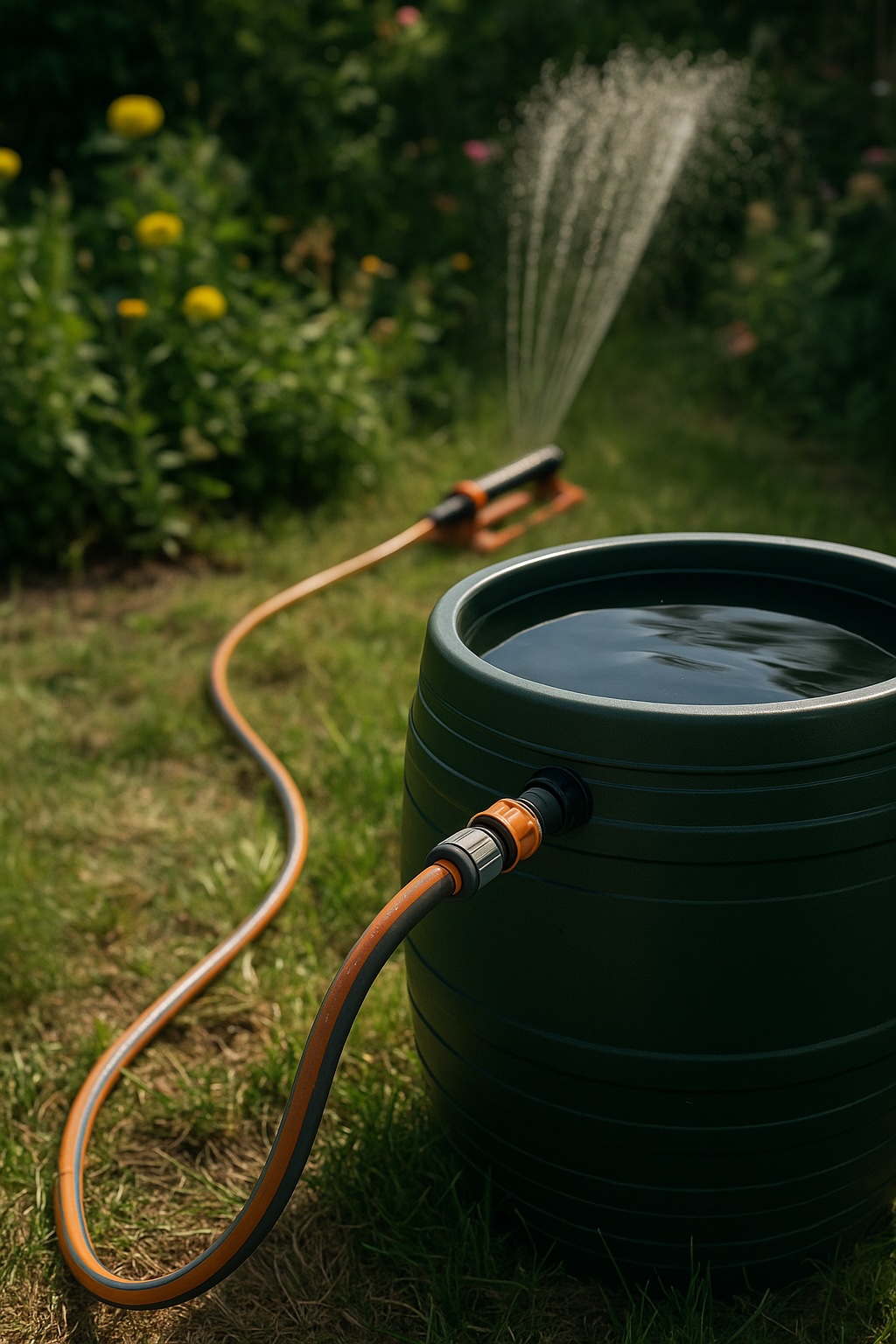
Rain capture (cleanest starting point)
Barrels: Use food-grade containers; fit gutter screens and a first-flush diverter to keep roof debris out.
Placement: Keep barrels shaded to reduce algae; raise on sturdy blocks for easy gravity transfer.
Sanitation: Rinse and sanitize water-storage containers before first use and at regular intervals, following the current instructions for the unscented household bleach concentration you are using. Rinse thoroughly afterward.
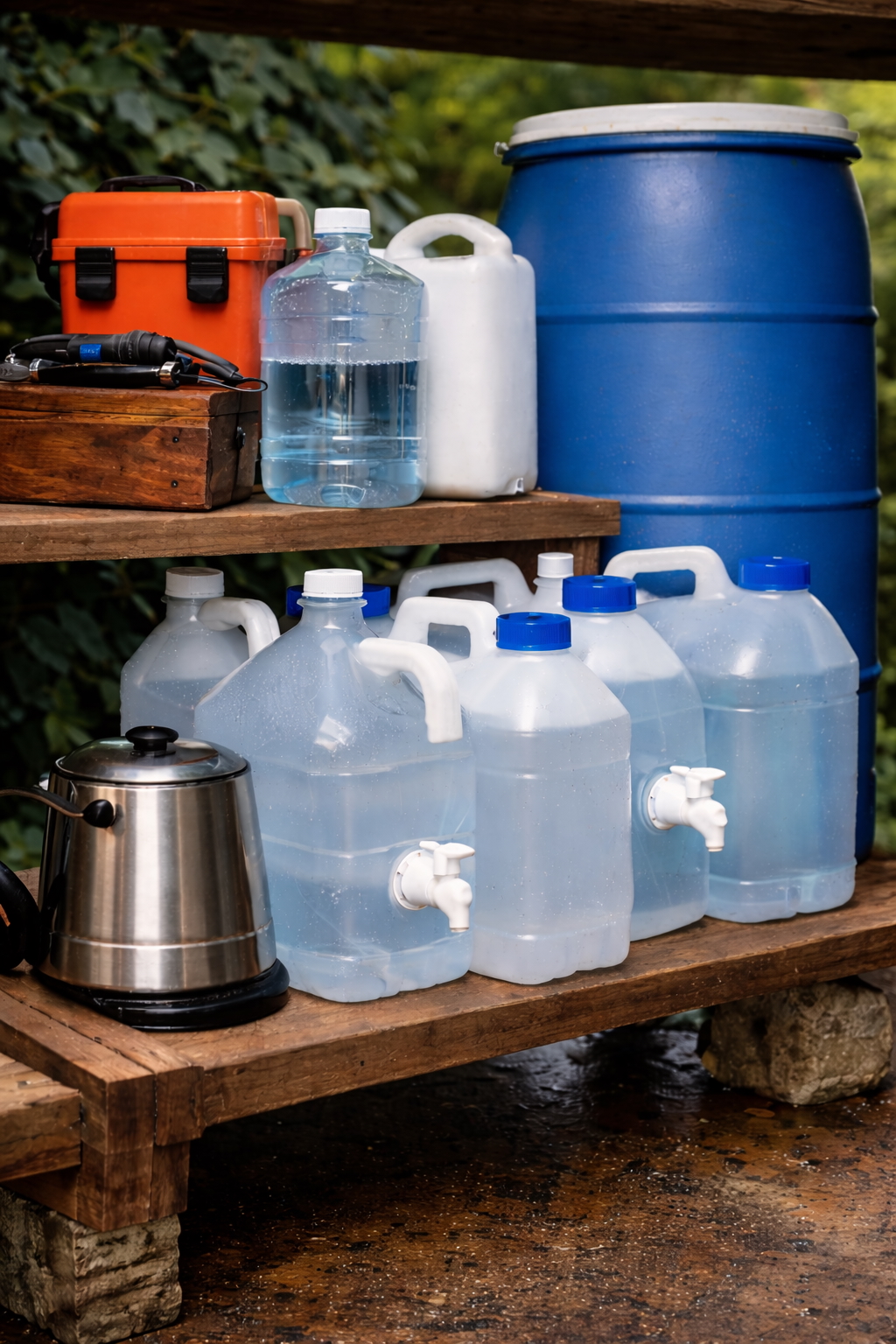
Storage & rotation (don’t skip this)
Short term: Clean, opaque containers with tight lids. Label “date filled.” Keep out of sun.
Medium term: Aim for a simple rotation rhythm (e.g., refresh every 3–6 months). Use older water for plants/cleaning and refill.
Transport: If you must haul lake/pond water, use dedicated containers. Keep “dirty” and “clean” containers separate.
Pre-filtration (protects your primary method)
Goal: Remove sediments, organic bits, and turbidity before fine filtration or distillation.
How: Pour through a clean cloth or a simple sediment filter (e.g., 5–20 micron) into a staging bucket.
Why: Reduces clogging of fine filters and keeps stills heating water, not mud.
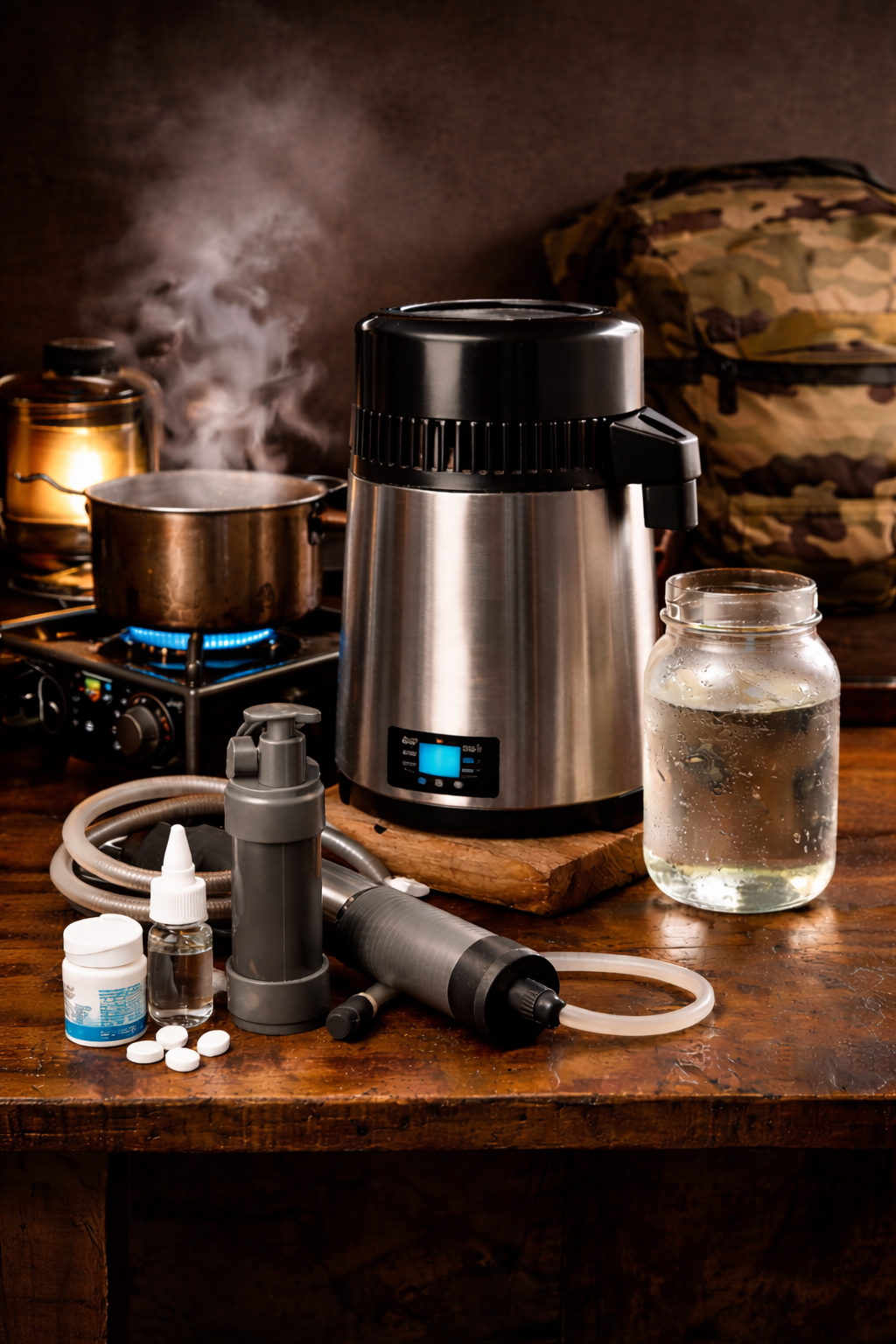
Distillation (highly robust “last mile”)
Distillation heats water to produce steam and then condenses it back to liquid, leaving most contaminants behind.
Pros: Very effective against microbes, sediments, and most dissolved solids; works even when source water is sketchy.
Cons: Slow; requires energy. Plan for batch cycles (e.g., ~1 gallon per cycle on countertop units).
Workflow: Pre-filter → load still → collect distillate into a clean container → store sealed.
Alternatives & complements
Boiling: Great for biological safety; does not remove dissolved solids or many chemicals.
Gravity filters: Ceramic + activated carbon are low-maintenance and good for daily use. Keep spare elements.
Chemical methods: Useful for microbes; be mindful of taste and proper dosing.
Safety notes (practical reality)
Containers: Only store finished water in clean, food-safe containers. Avoid reusing old chemical jugs.
Cross-contamination: Keep “dirty side” tools (lake buckets, pre-filters) separate from “clean side” containers.
After storage: If stored water looks/smells off, re-filter and bring to a rolling boil—or re-distill—before drinking.
This week: 3 steps to get real
Capture: Set up (or inspect) rain barrel + screen + first-flush; label a clean transfer container.
Pre-filter: Assemble a simple sediment stage (cloth + funnel or a 5–20 micron inline filter).
Distill: Run one full batch from your most likely emergency source; bottle and label. Note cycle time and power use.
In this series
Three focused articles that go deeper than this overview.
Water — Foundations
Understand your baseline needs and build a reliable home water setup.
Read article →
Water — Practical
Filtration, treatment, storage rotation, and realistic contingency planning.
Read article →
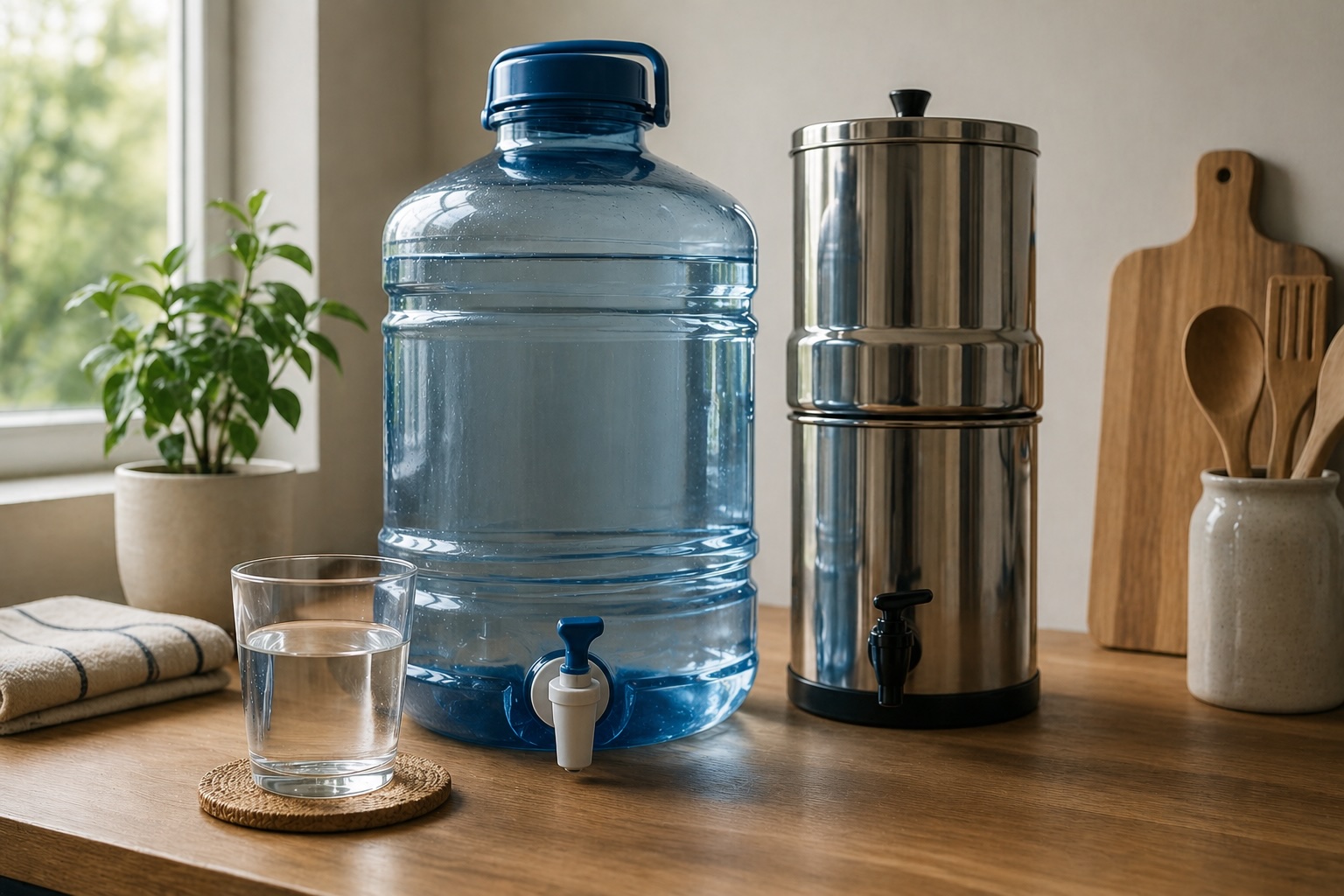
Water — Clarity
A simple framework: access, storage, and quality. Reduce complexity before building systems.
Read article →
Reliable Water Access
A three-part series on securing supply, treating water safely (including distillation), and using water wisely under constraint.
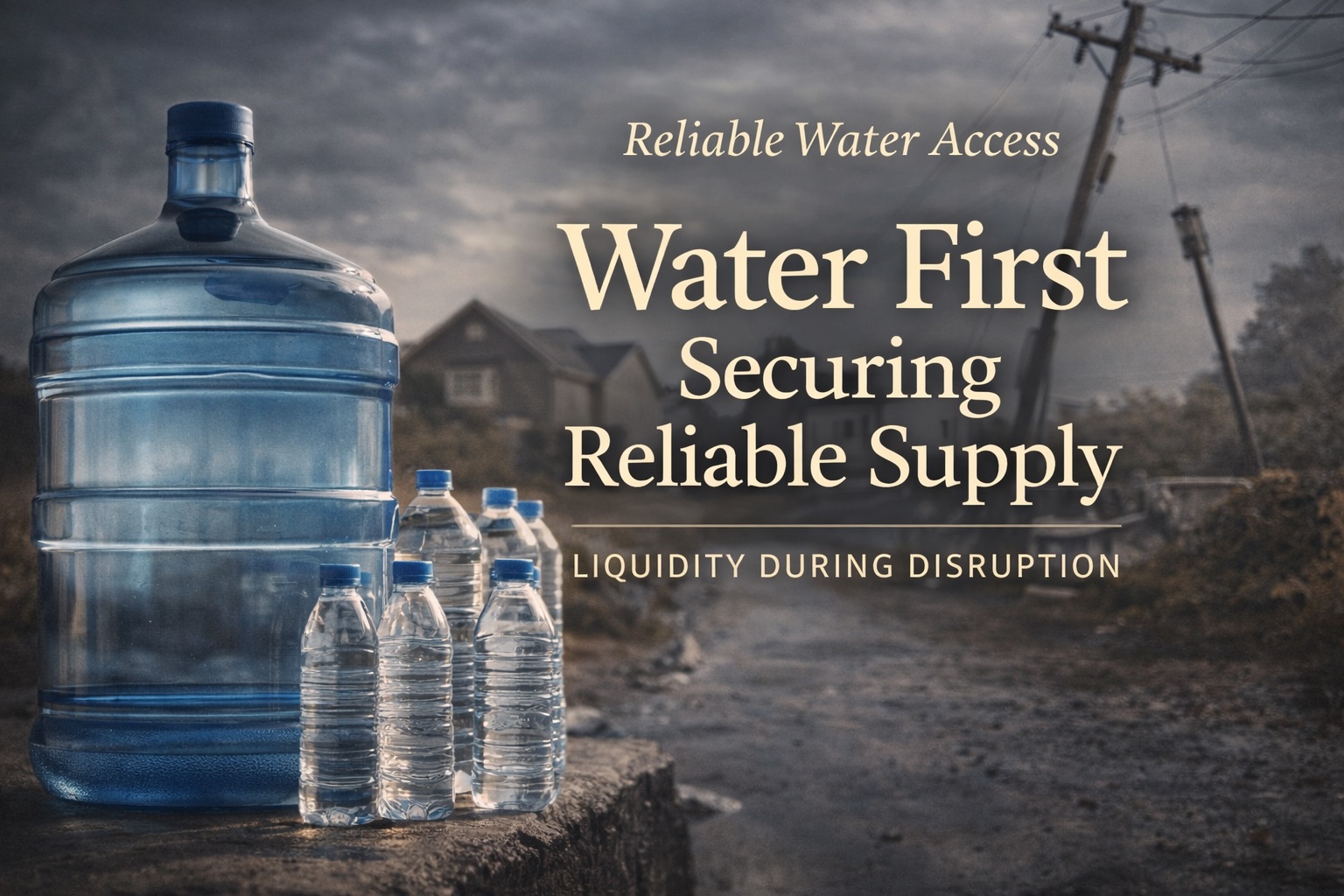
Securing Reliable Supply
Build a realistic buffer, keep redundancy simple, and preserve agency during common disruptions.
Read article →
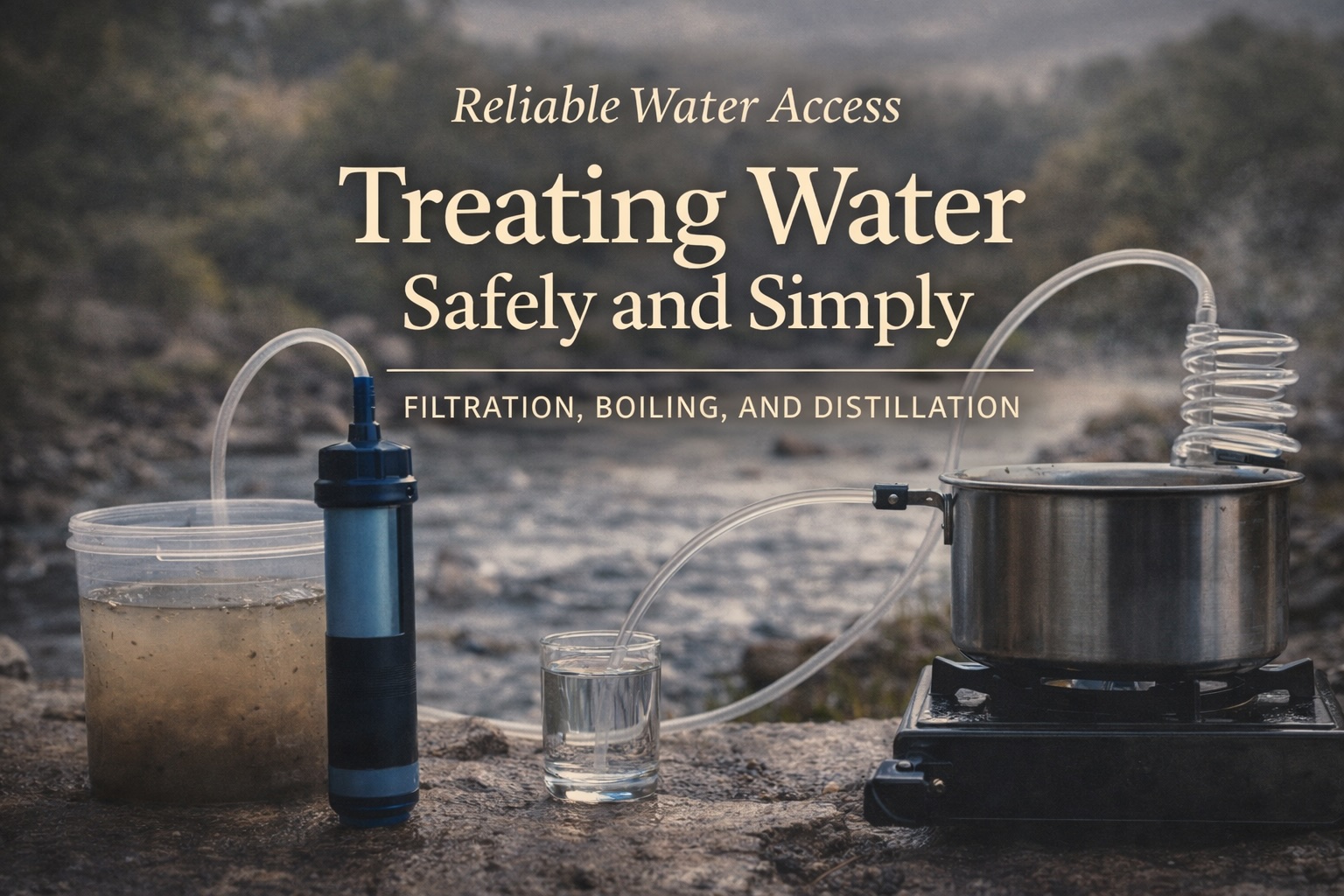
Treating Water Safely and Simply
A calm treatment hierarchy: clarity, disinfection, filtration — plus distillation as a thorough backstop.
Read article →
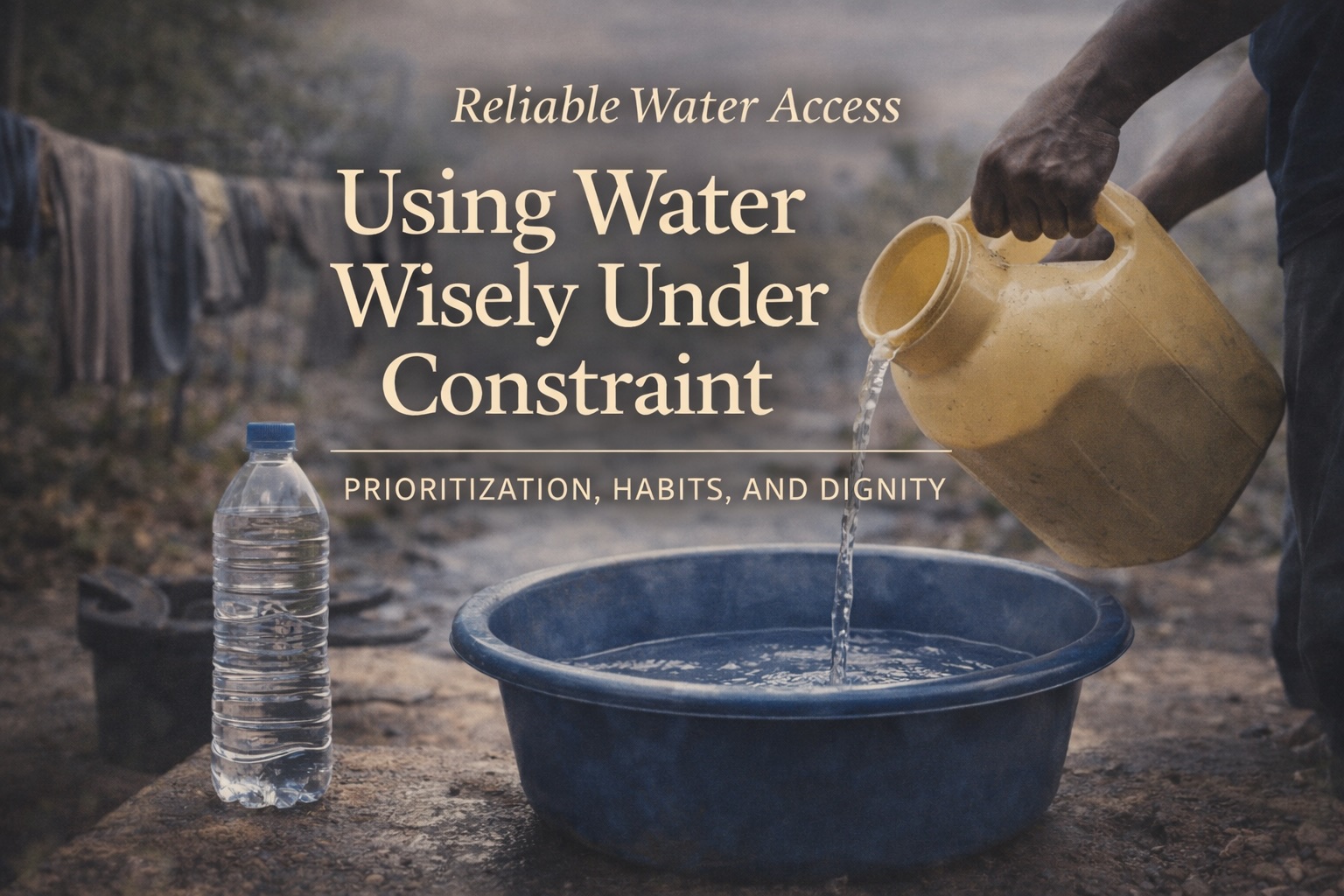
Using Water Wisely Under Constraint
Prioritize essentials, adjust habits, and extend supply without turning it into a deprivation contest.
Read article →
Your optimal setup depends on house layout, local water sources, and power options. Aion can help you think through options based on your specific situation.