Power — Foundations
Last updated: 2025-12-30 · 9 min read
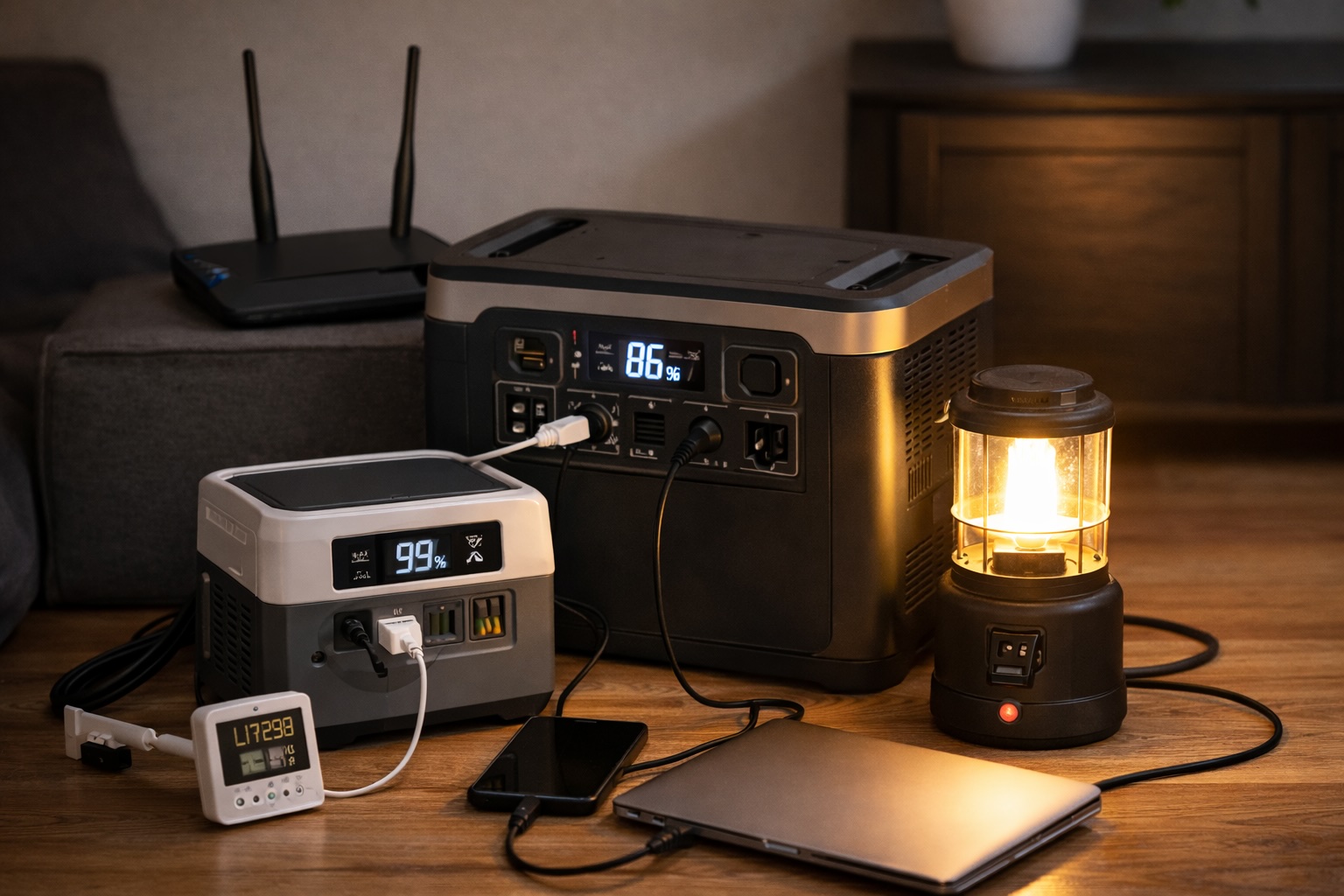
Power resilience is about maintaining function, not recreating the grid. This guide explains how to keep essential systems running during outages using simple, low-friction solutions that can be executed reliably under stress.
- Start by identifying what truly needs power, not everything you own.
- Short outages are best handled with batteries, not generators.
- Redundancy beats capacity—multiple small solutions are more resilient.
- Test everything once before you actually need it.
Purpose
Define a practical power baseline that prioritizes essential loads over total capacity, so outages can be handled with minimal complexity. The goal is to maintain communication, safety, and basic functionality using simple, testable systems rather than large, fragile setups.
Identify your essential power needs
Most homes overestimate how much power they need. Power foundations start by separating essential loads from convenience loads.
- Phone charging and communications
- Internet modem / router (if service is up)
- Lighting in a few rooms
- Refrigeration (intermittent, not continuous)
- Medical or safety-critical devices
If you list these items on paper, you’ll usually find that your true baseline is far smaller than expected.
Batteries: your first line of defense
For outages lasting hours to a few days, batteries are usually the cleanest solution. They’re silent, low-profile, and easy to operate under stress.
- Portable battery stations for phones, laptops, lights, and routers
- Smaller power banks distributed across rooms
- Recharge via grid, car, or solar when available
Tip: Multiple smaller batteries reduce single points of failure and are easier to rotate.
Generators: limited but useful
Generators are best treated as situational tools, not default solutions. They excel at short, deliberate runs—cooling a fridge, recharging batteries, pumping water.
- Use outdoors only, far from windows and doors
- Run intermittently rather than continuously
- Store fuel safely and rotate it
Many failures happen because generators are relied on constantly rather than tactically.
Solar: modest, not magical
Small‑scale solar is a resilience tool, not an energy miracle. For most households, portable panels paired with batteries extend uptime rather than replace the grid.
- Solar primarily offsets battery drain instead of running loads directly
- Recharge is gradual and weather‑dependent
- Best suited for lighting, communications, and low‑draw devices
Clear expectations prevent overspending and disappointment. Solar adds endurance—not independence.
Thinking in runtime, not watts
Most power planning fails because it focuses on peak wattage instead of runtime. What matters is how long you can keep essentials alive, not how much power you can theoretically produce.
- Phones, lights, and routers sip power over long periods
- Appliances spike briefly, then sit idle
- Batteries excel at long, quiet runtime
A modest battery that lasts 24–48 hours often beats a powerful setup that fails after 4.
Where equipment should live
Power gear works best when placement is deliberate:
- Batteries indoors, near essential devices
- Generators stored but staged for fast outdoor deployment
- Cords pre‑routed and labeled to avoid confusion
The goal is zero decision‑making under stress.
Rotation and maintenance
Power systems quietly fail when they sit unused.
- Recharge batteries every few months
- Start generators briefly on a schedule
- Check fuel age and stabilizer dates
Five minutes of routine testing prevents hours of troubleshooting during an outage.
Common mistakes
- Trying to power the entire house instead of essentials
- Buying equipment without testing it once
- Relying on a single large device
- Ignoring fuel, cords, or ventilation constraints
Next step
Once your baseline is clear, the next phase is building a layered system that integrates batteries, generators, and renewables cleanly. This is covered in Power — Practical.
Educational content only. Follow local safety codes and manufacturer guidance.