Water — Clarity
Last updated: April 2026
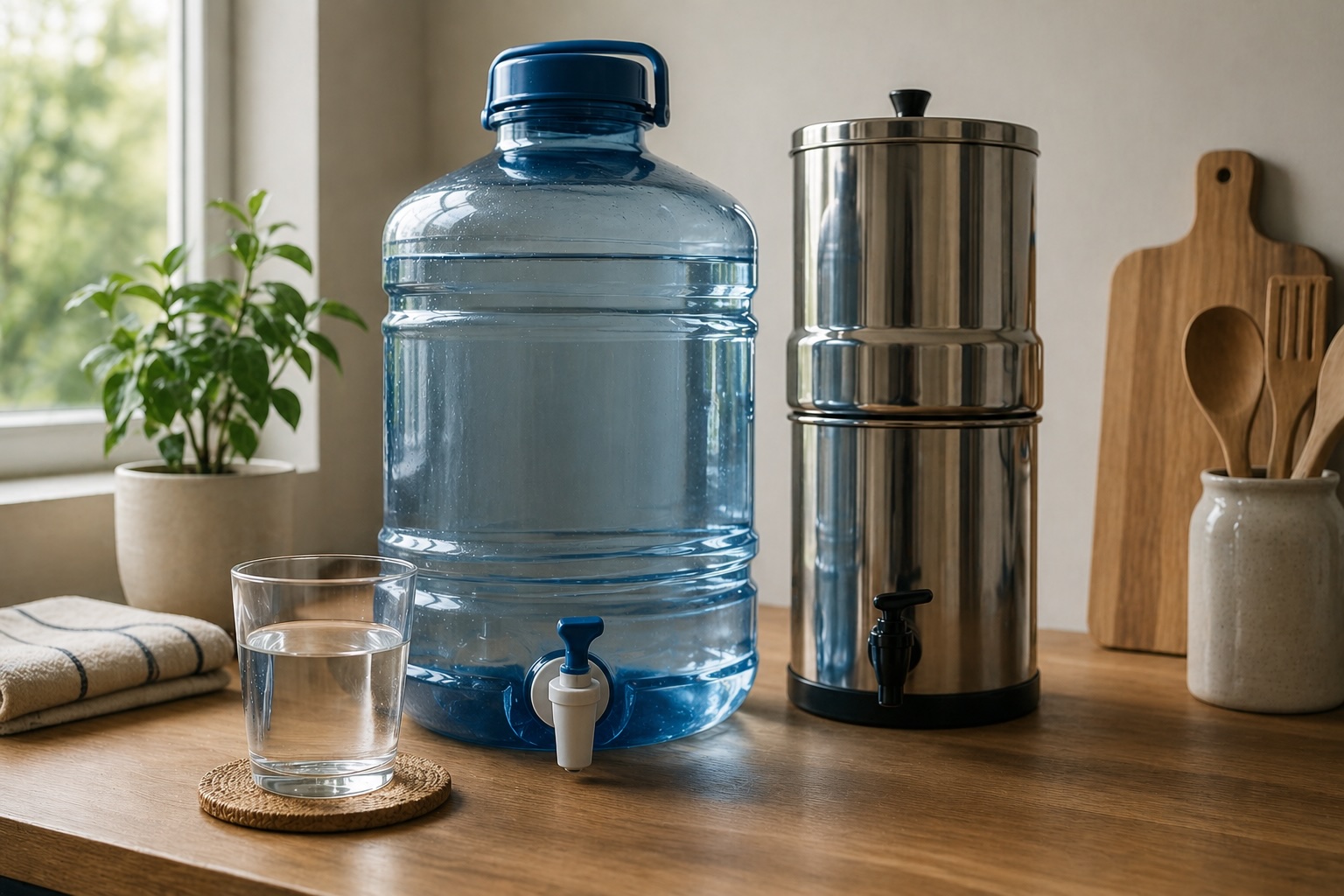
Water clarity comes from understanding what actually matters: reliable access, usable storage, and safe quality. Most water systems become complicated when people optimize too early instead of stabilizing the basics first.
- Water clarity starts with access, storage, and quality — everything else is secondary.
- Storage comes before optimization — having water available is more useful than designing a perfect system too early.
- Simple systems are more reliable — water that is easy to access and use is more likely to help when needed.
- Water supports other systems — food, energy, finances, and decision-making all become easier when water is stable.
Purpose
Help readers think clearly about water by focusing on reliable access, manageable storage, and practical quality control without unnecessary complexity or overbuilding.
The problem is assumptions
Water is one of the simplest systems to understand and one of the easiest to overlook. It is needed every day, yet it is rarely planned for until something goes wrong.
At large scale, water systems involve infrastructure, treatment, distribution, and regulation. But at the household level, the challenge is usually much simpler.
The real problem is not complexity. The problem is assuming water will always be available in the same way it is today.
Clarity begins by separating what is essential from what is assumed.
What actually matters
At a practical level, water can usually be reduced to three questions:
- Access: Can you obtain water when you need it?
- Storage: Can you keep a usable amount available?
- Quality: Is it safe to drink?
Everything else is secondary. When these three areas are stable, most situations become far more manageable.
Where people go wrong
Many people jump directly to advanced solutions: large filtration systems, complicated purification setups, or expensive storage projects.
While these tools can be useful, they often introduce complexity before the foundation is stable.
The result is frequently a system that is harder to maintain, harder to use consistently, and less reliable under stress.
A more manageable approach
Water clarity improves when systems are built gradually and kept practical:
- Start with storage: having water immediately available is usually more valuable than having a perfect production system.
- Keep it accessible: water that is difficult to reach or use becomes less reliable in practice.
- Add treatment later: filtration and purification can be layered in once the foundation is stable.
This reduces friction and increases the likelihood that the system will actually work when needed.
Stability before optimization
A small, reliable water setup is usually more useful than a large system that is difficult to maintain.
Clarity comes from consistency: knowing where your water is, how much you have, and how to use it without hesitation.
Optimization can come later. Stability should come first.
How water supports other systems
Water does not exist in isolation. It directly supports other areas of resilience:
- Food: cooking and preparation depend on reliable water.
- Energy: some water systems require power while others remain passive.
- Finances: manageable systems reduce unnecessary spending and replacement costs.
- Decision-making: fewer unknowns reduce pressure during disruptions.
When water is stable, many other decisions become easier.
What clarity looks like in practice
A clear water setup is not defined by complexity. It is defined by usability.
- You know how much water you have available.
- You can access it quickly.
- You understand how to use or treat it if needed.
There is usually no need to build beyond what you can realistically maintain.
Final thought
Water clarity is not about building the most advanced system.
It is about building a system that continues working with minimal friction.
In most situations, that is enough.
Next steps
Continue with Water — Foundations and Water — Practical. For the decision-making side, pair this article with Calm — Clarity.
This article focuses on practical water planning and decision-making, not engineering, medical, or safety advice.